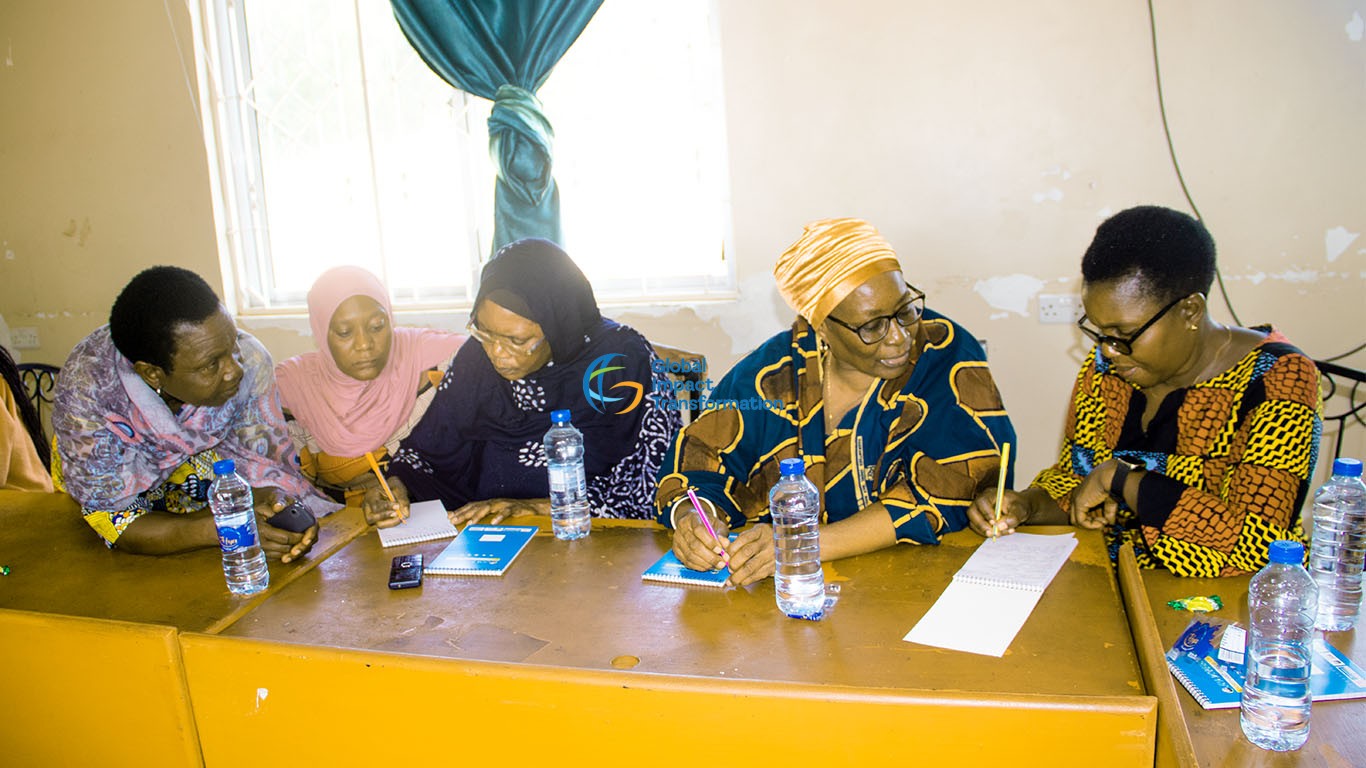
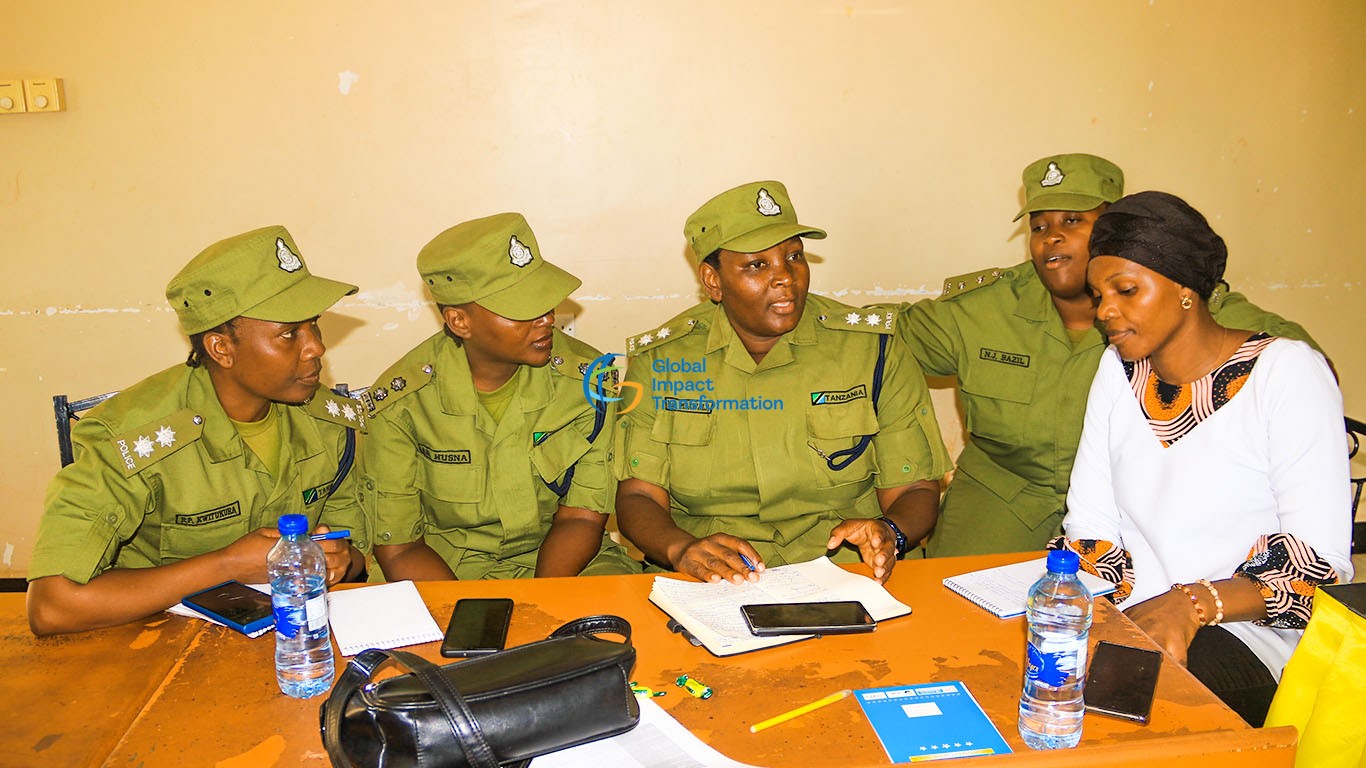
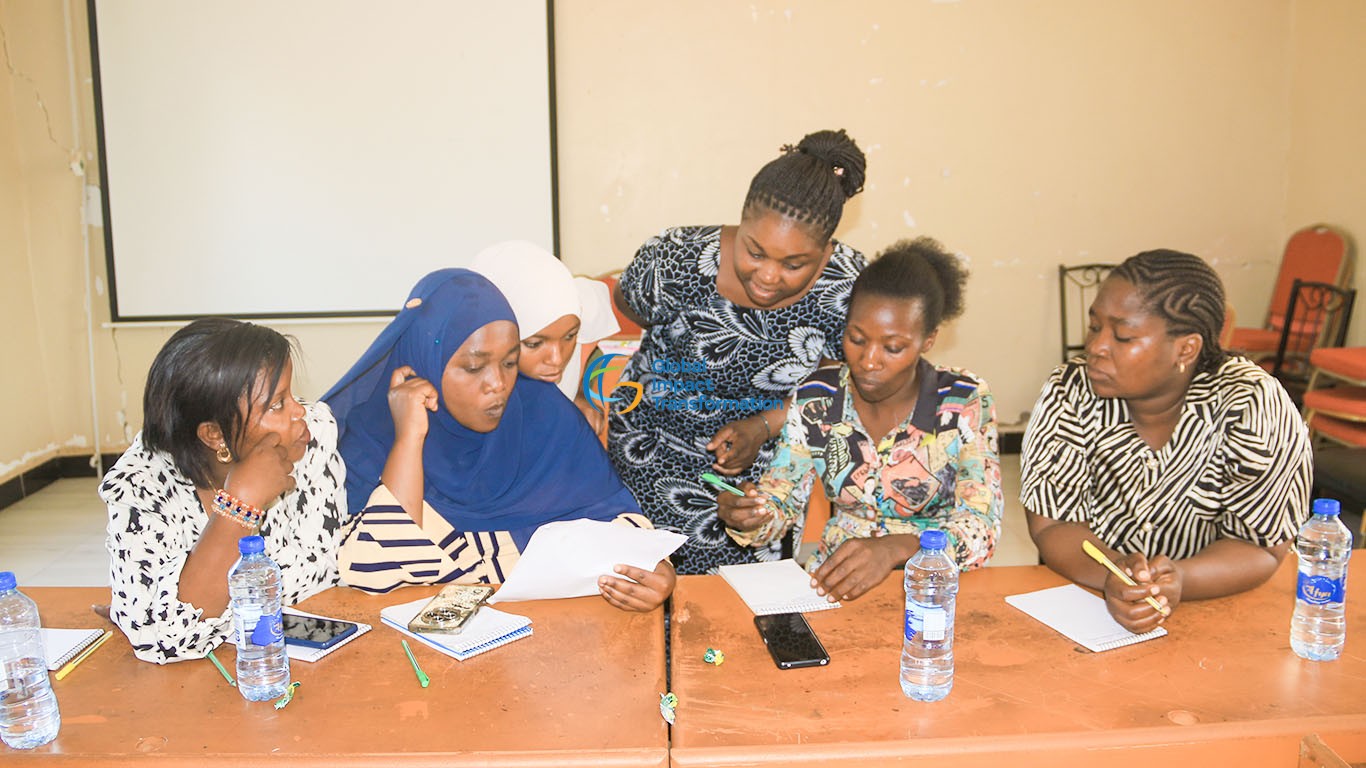
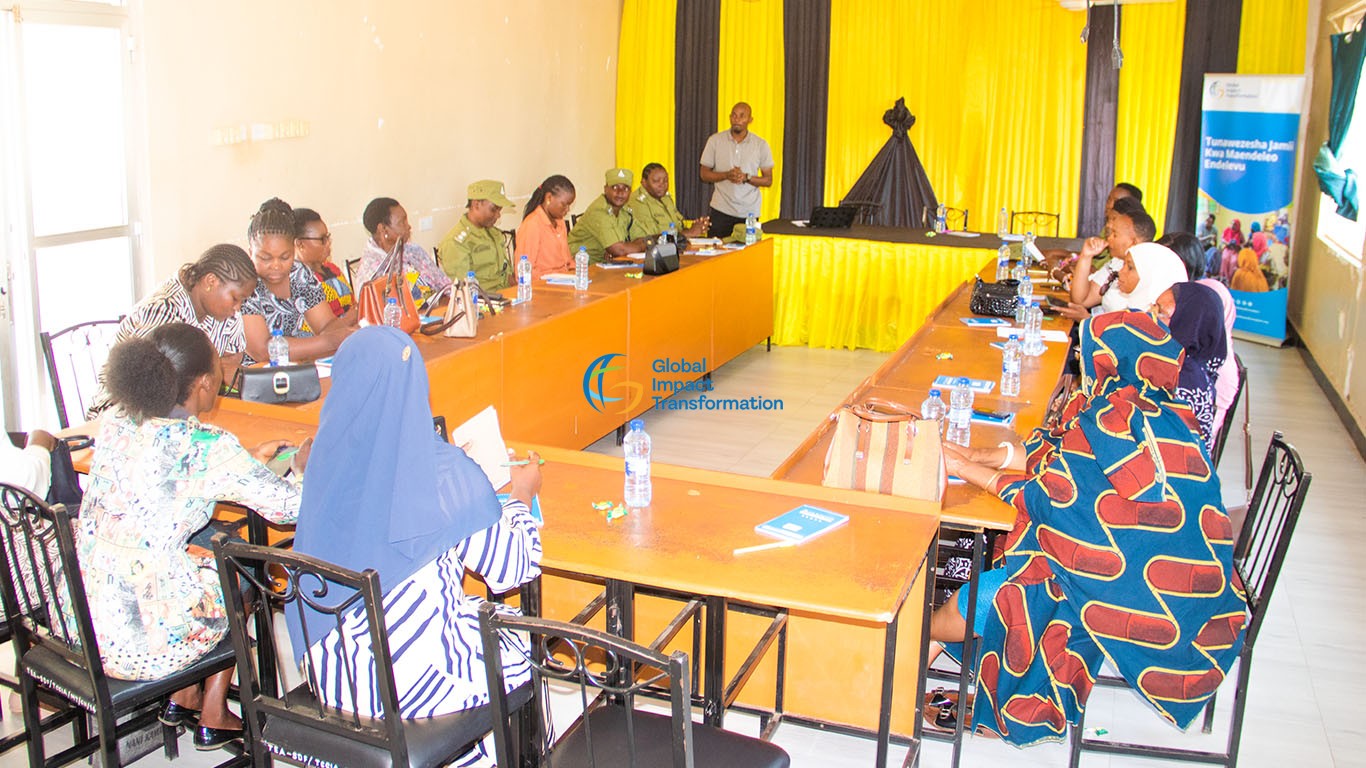
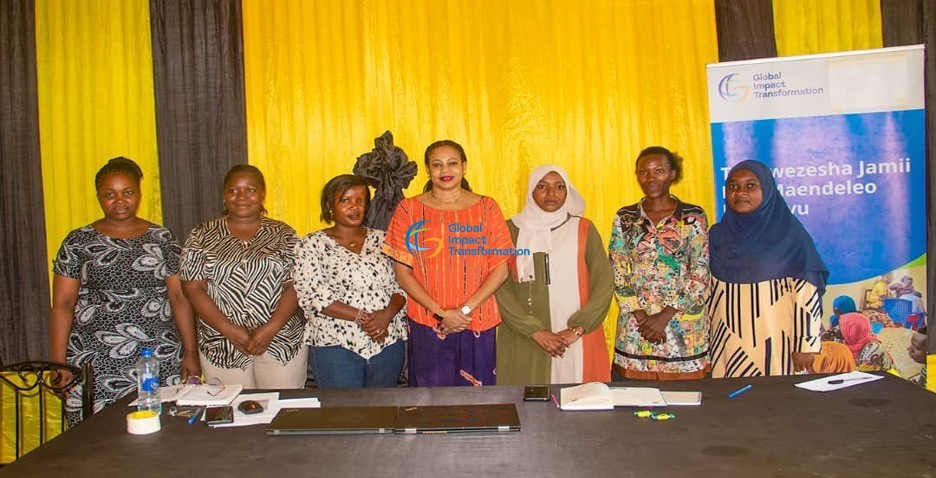
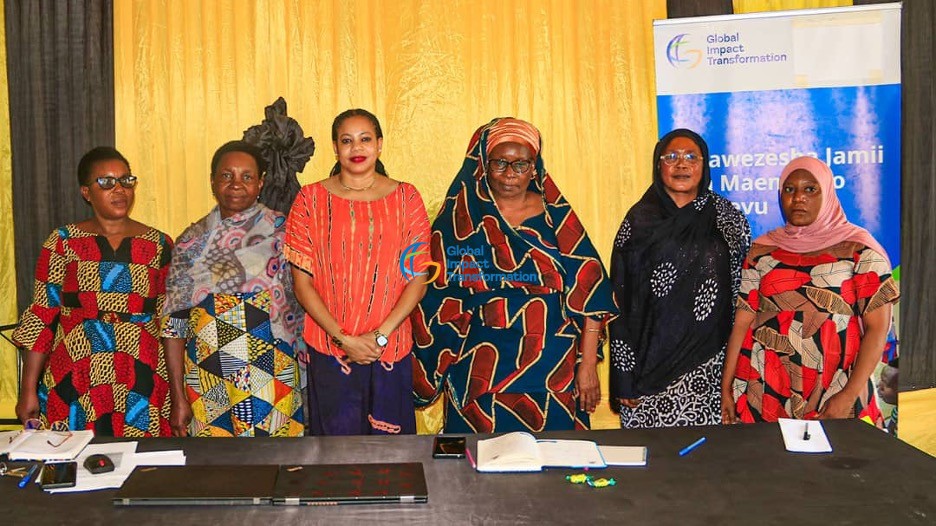
Global Impact Transformation (GIT) convened a one day workshop in Mtwara Region to strengthen women’s leadership in local peace building and to promote their full, equal, and meaningful participation in decision-making processes related to peace and security. The workshop came at a pivotal time following the launch of Tanzania’s National Action Plan on Women, Peace and Security (TNAP 2025–2029), serving as a bridge between national commitments and local realities. The workshop, held at the Tanzania Chamber of Commerce, Industry and Agriculture (TCCIA), brought together women leaders, local government authorities, security actors, and community representatives for an interactive dialogue on how women can shape and sustain peace in their communities. The session was graced by Ms. Pelagia Mwasu Kijuu, UN Women Southern Zone Representative, who reaffirmed the importance of localizing the WPS agenda to ensure that women at the grassroots are recognized as agents of peace, not merely beneficiaries.
Advancing the Tanzania National Action Plan (TNAP 2025–2029) through community-driven leadership and collaboration
By Communication team,
The workshop followed the official launch of the Tanzania National Action Plan on Women, Peace and Security (TNAP 2025–2029) and served as a strategic platform to translate national commitments into local action. It aimed to deepen understanding of the WPS pillars prevention, participation, protection, and relief and recovery and to explore how these can be effectively localized within community structures in Mtwara. Participants engaged in interactive sessions on women’s roles in early warning systems, mediation, dialogue, and community leadership, drawing connections between their lived experiences and national policy frameworks.
Through inclusive and participatory discussions, the dialogue underscored that sustainable peace depends on strong partnerships among women’s networks, government institutions, traditional and religious leaders, and local authorities. Participants reaffirmed that integrating women’s leadership in governance, peace building, and security structures is not only a human rights commitment but also a strategic investment in stability, resilience, and social cohesion. The workshop concluded with a shared understanding that localizing the WPS agenda requires coordinated action, continuous capacity building, and policy ownership at the community level to ensure that no woman or girl is left behind in peace and security processes.
The WPS agenda was formalized by the UN Security Council with Resolution 1325 (2000), recognizing that women are not only disproportionately affected by conflict but are also essential actors in prevention, mediation, peacekeeping, relief, recovery, and reconstruction. It called for women’s full, equal, and meaningful participation in all peace and security processes, protection from violence (including conflict-related sexual violence), and the integration of gender perspectives across peace operations.
Core Pillars:
WPS is commonly organized around four mutually reinforcing pillars:
- Prevention of conflict and all forms of violence against women and girls;
- Participation of women at all decision-making levels in peace and security;
- Protection of the rights and safety of women and girls;
- Relief & Recovery that is gender-responsive and inclusive.
Looking Ahead
Reflections from the convening point to practical ways of aligning local forums with TNAP 2025–2029 for example, integrating WPS priorities in routine ward and district discussions, encouraging gender-responsive data for light monitoring, and promoting do-no-harm and safeguarding standards. These directions can help sustain locally owned approaches that strengthen responsive governance and uphold women’s full, equal, and meaningful participation in peace and security.