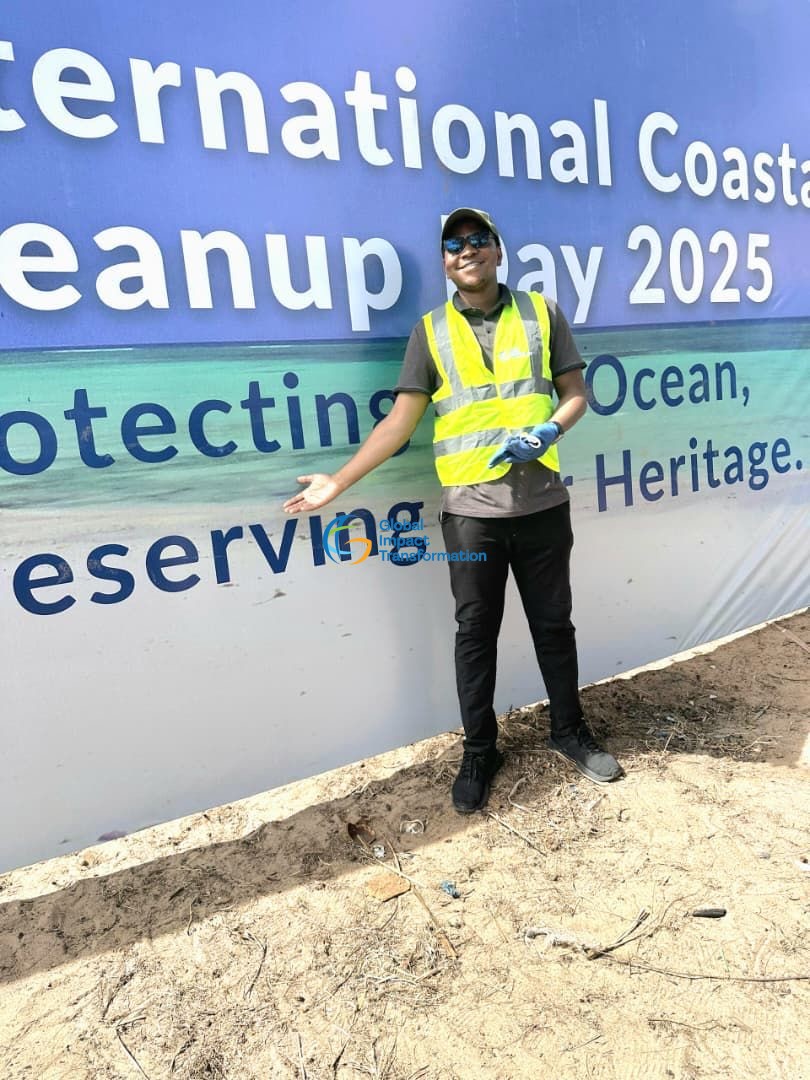
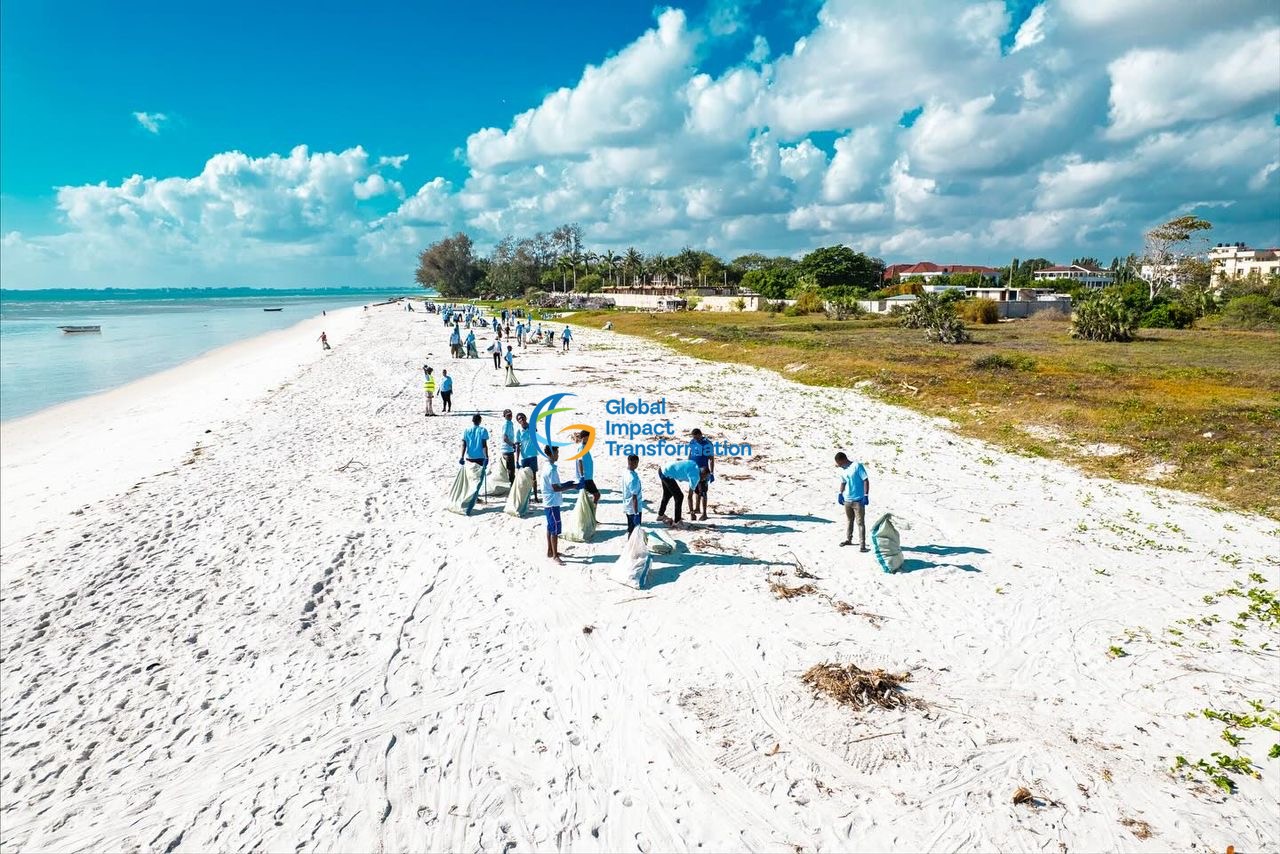
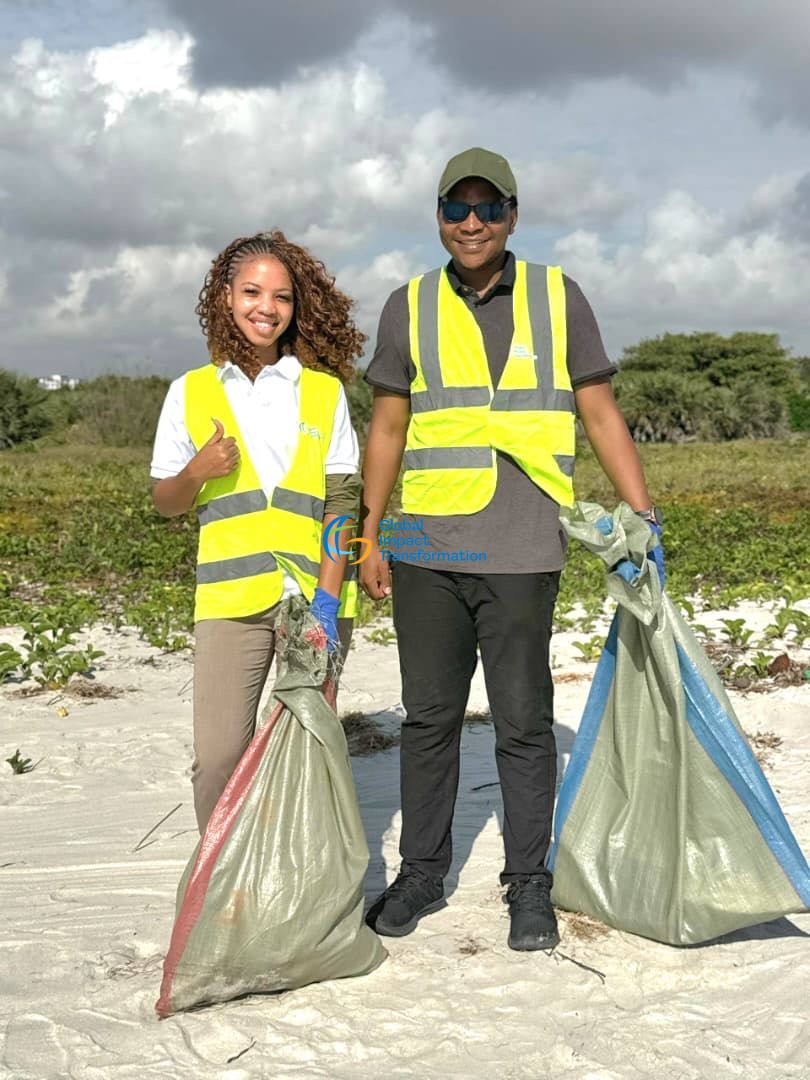
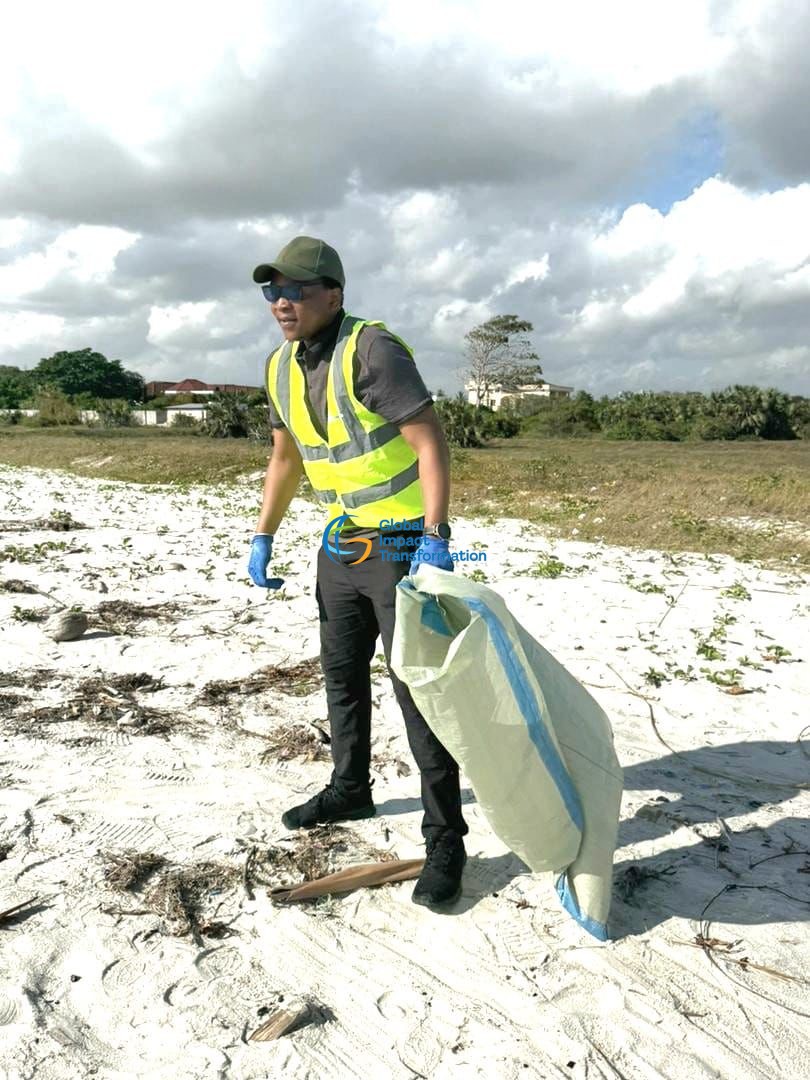
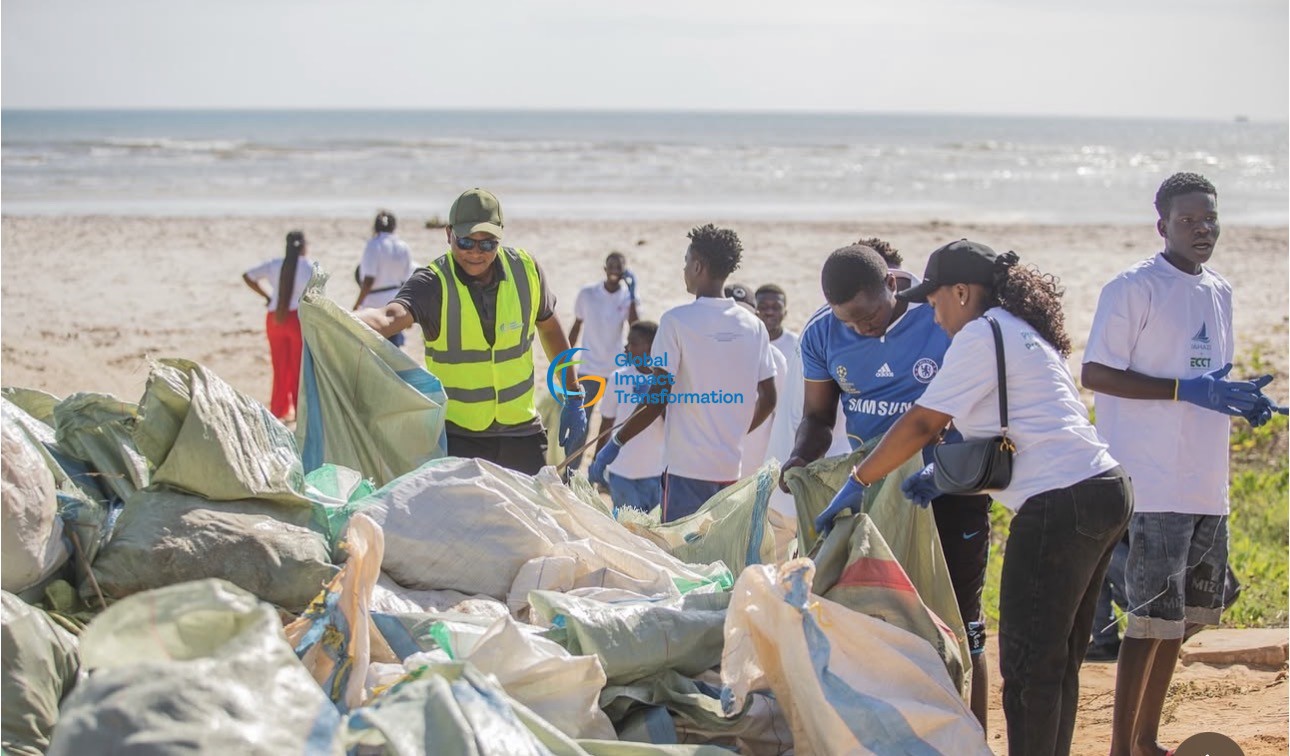
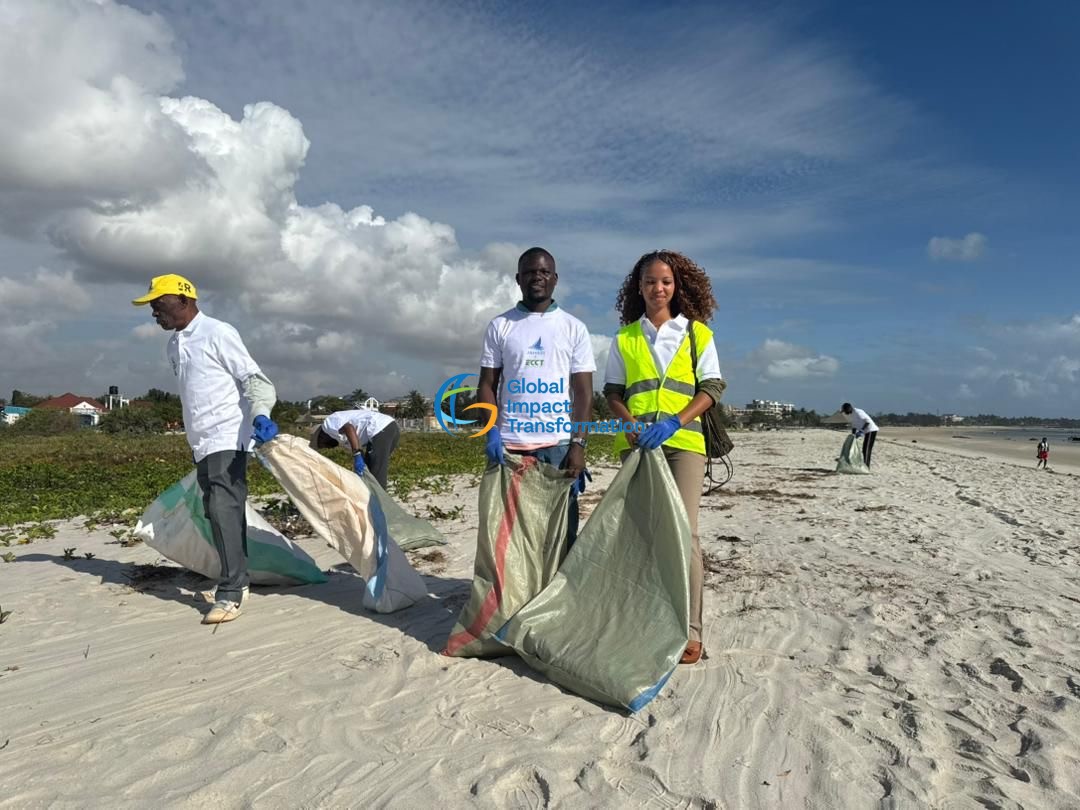
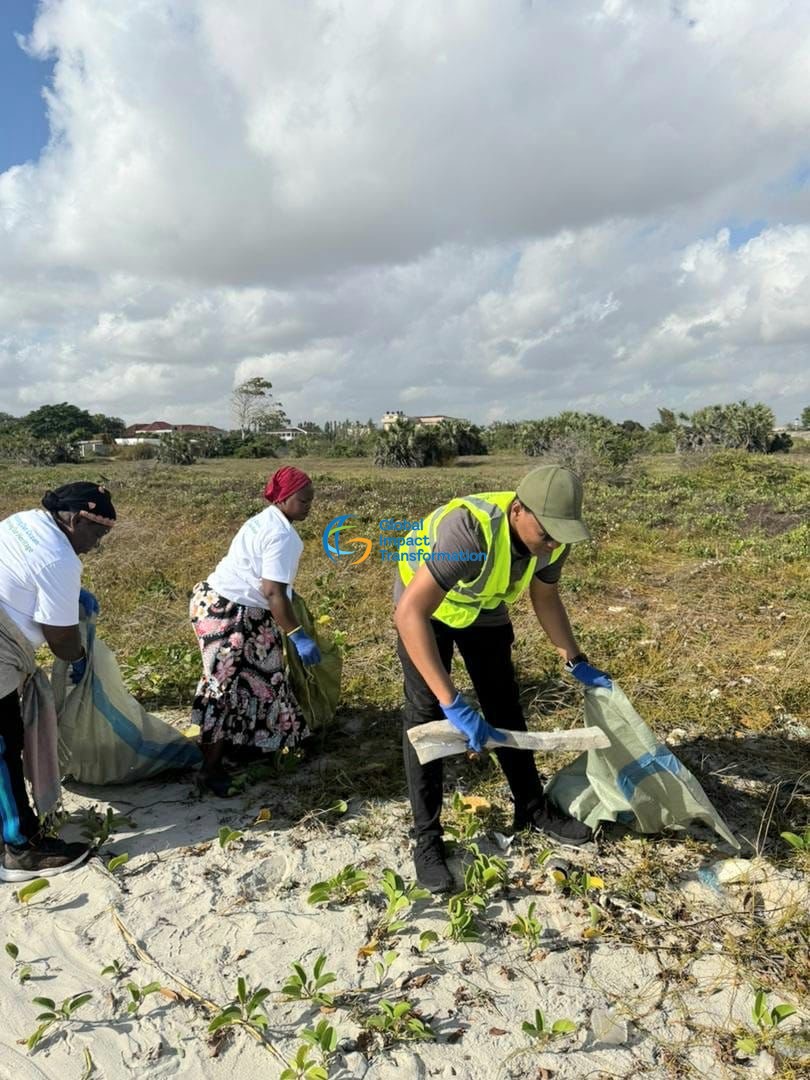
On 20 September 2025, the world united to commemorate World Cleanup Day, a global movement mobilizing millions of volunteers across more than 190 countries to tackle waste, protect ecosystems, and advance sustainable development. In Tanzania, Global Impact Transformation (GIT) proudly joined hands with the Environmental Conservation Community of Tanzania (ECCT) and other partners to mark the day through a beach cleanup initiative.
From Estonia to Tanzania: A Global Call for Cleaner, Safer Communities
By Communication team
World Cleanup Day traces its origins to 2008 in Estonia, where more than 50,000 volunteers representing nearly 4% of the country’s population came together and cleared 10,000 tons of waste in just five hours. This remarkable act of civic responsibility sparked the creation of a global movement, now known as World Cleanup Day, which today mobilizes over 60 million people across 190+ countries every year. What began as a local initiative has grown into one of the world’s largest civic environmental campaigns, transcending borders, cultures, and faiths under a shared mission: building a cleaner, healthier, and more sustainable planet
Local Action, Global Movement
The beach cleanup mobilized community members, young people, and civil society actors in a collective effort to clear plastics and other waste from Tanzania’s coastline. By joining forces, GIT and its partners demonstrated that environmental protection is a shared responsibility and that collaboration amplifies impact.This action aligned with the global spirit of World Cleanup Day: moving beyond waste collection to building awareness, solidarity, and long-term solutions for a cleaner and healthier planet. This commemoration was not just about cleaning the environment. It was a powerful call to action to protect Tanzania’s coastlines, strengthen climate resilience, and link grassroots women and youth leadership to the global Blue Economy and Sustainable Development Goals (SDGs)
Grassroots Innovation Strengthening the Blue Economy
Under GIT’s ongoing programs, women- and youth-led groups such as UWAMATA in Tandale-Manzese, Tupambane in Mtwara, and Wanawake Tunaweza in Bagamoyo are pioneering community innovations that help protect both the environment and coastal livelihoods. By producing eco-friendly charcoal as an alternative to mangrove and coastal wood harvesting, and organic soaps that reduce chemical run-off into water sources, these groups are contributing to healthier ecosystems that directly support Tanzania’s Blue Economy.
The commemoration of World Cleanup Day 2025 through the beach cleanup underscored the same principle: that protecting coastlines from plastic and waste pollution must go hand in hand with reducing upstream pressures caused by unsustainable energy use and poor waste management. Taken together, these actions show how women and youth innovations at the community level strengthen resilience not only on land but also in Tanzania’s marine and coastal environments from beaches to fisheries.
Why This Matters
Plastic and waste pollution threaten Tanzania’s marine ecosystems, fisheries, and tourism all central to the country’s Blue Economy. Women and youth, who are often the most affected by these challenges, are also the greatest agents of change.
By participating in World Cleanup Day, GIT underscored the urgent need to. safeguard coastlines from pollution, recognize and support women and youth as leaders in climate action and strengthen partnerships to scale community-driven innovations.
World Cleanup Day is more than an annual commemoration, it is a global movement that calls for collective responsibility and sustained action. By participating alongside ECCT and other partners, GIT demonstrated that local engagement can drive global change.
As we look ahead, GIT remains committed to ensuring that women and youth in Tanzania are not just participants but leaders in safeguarding the environment, driving innovation, and shaping the future of the Blue Economy.
For partnerships and collaboration: info@globalimpacttransformation.org