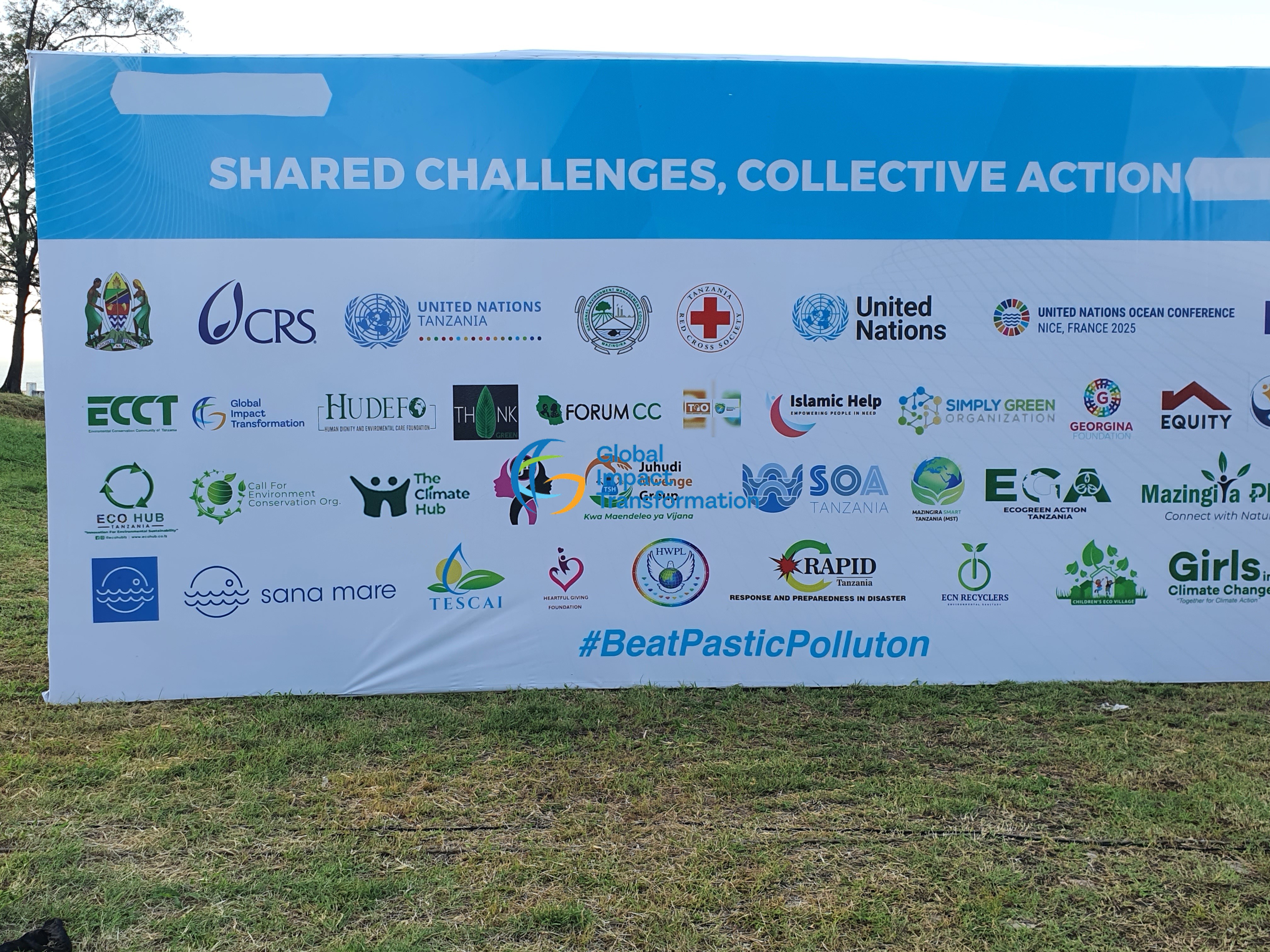
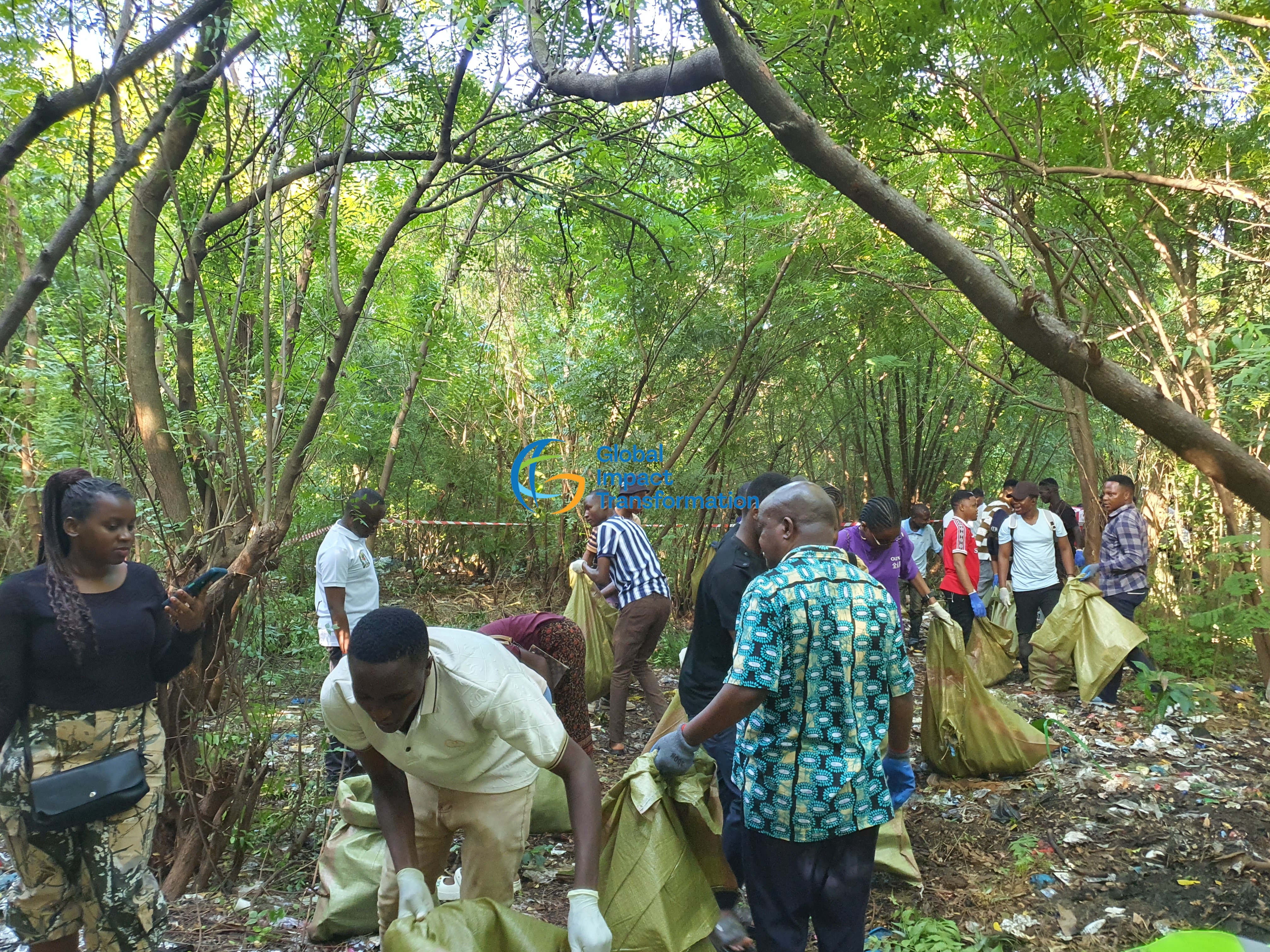
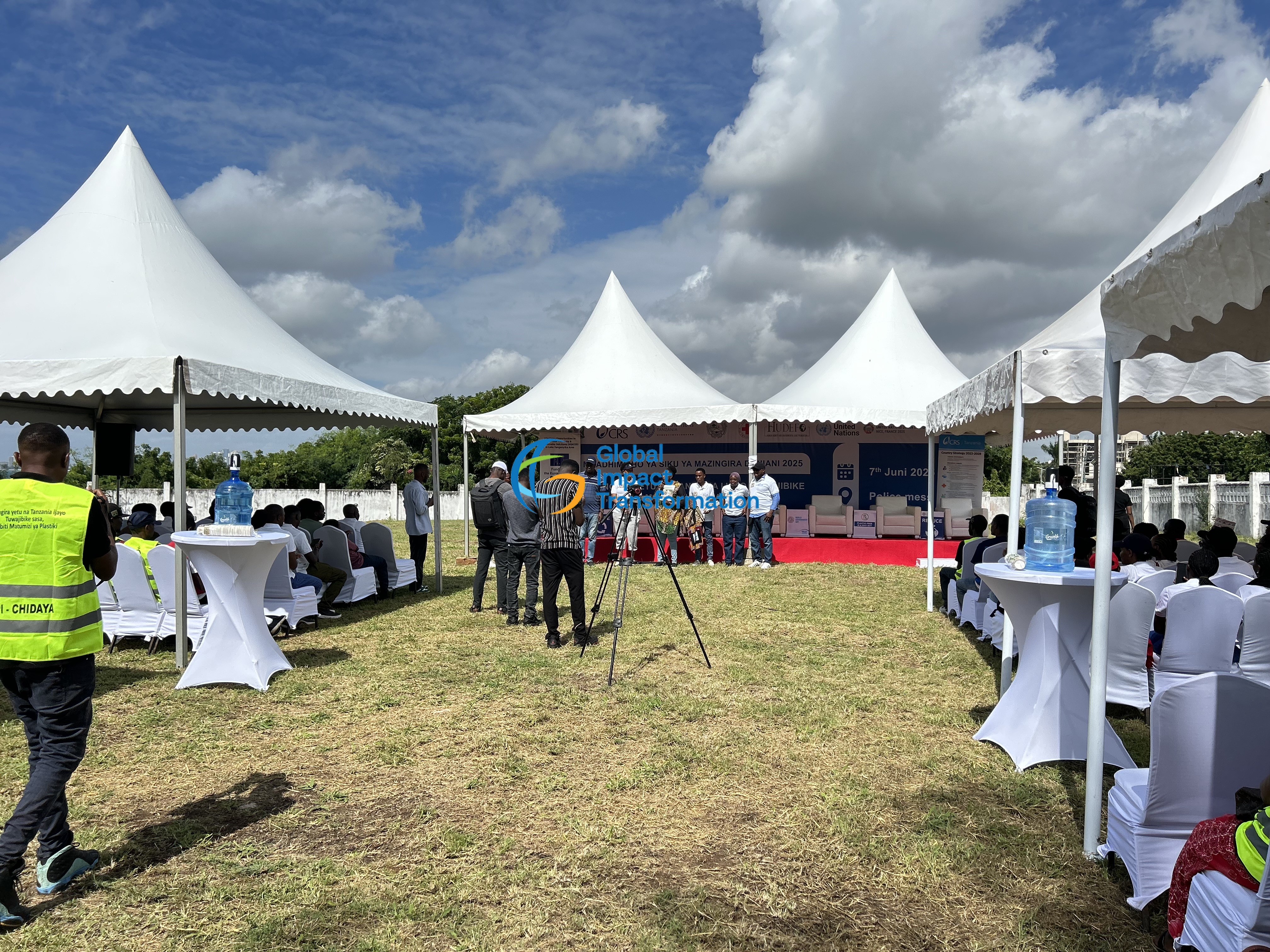
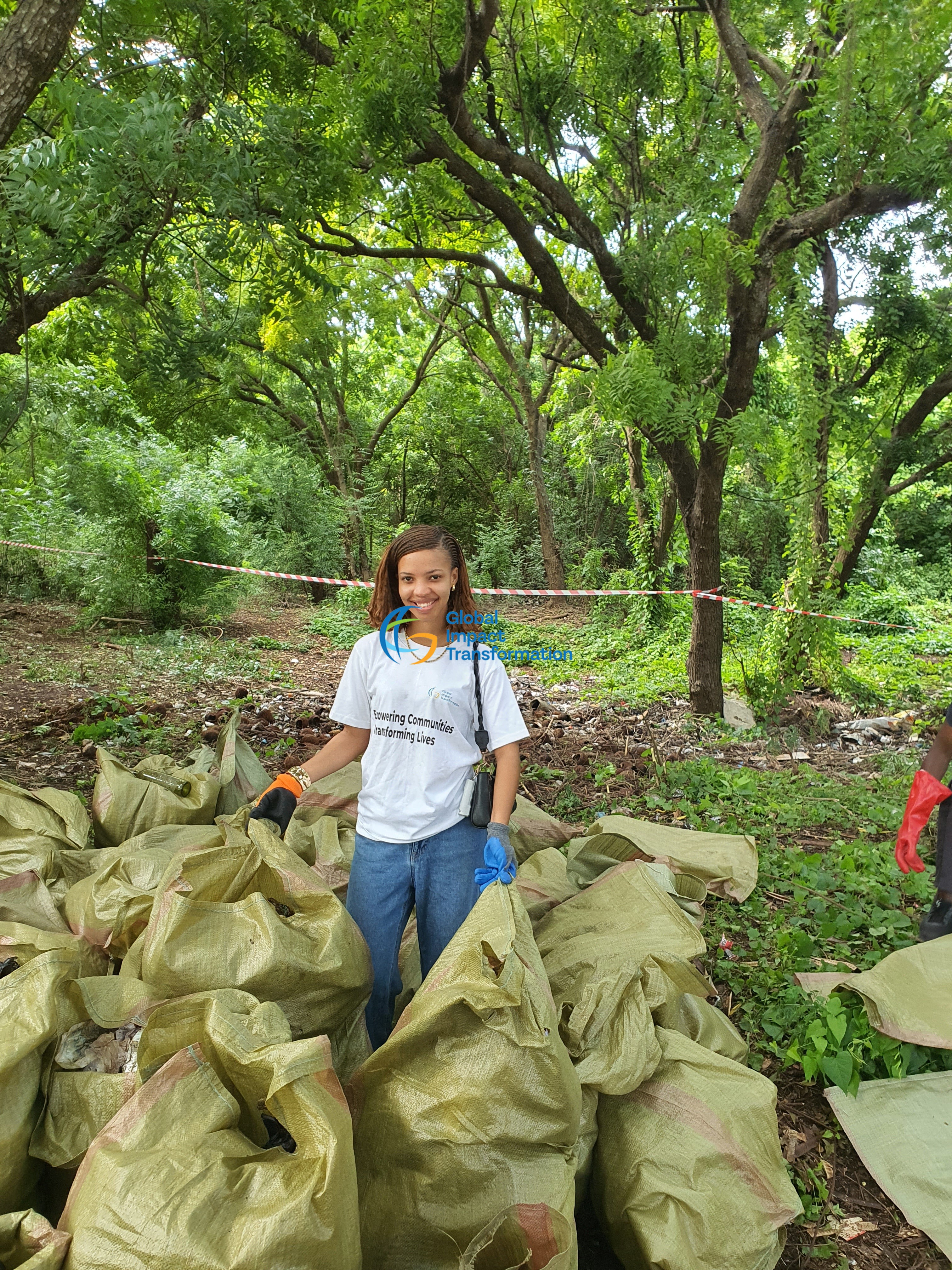
On World Environment Day 2025, Global Impact Transformation (GIT), joined forces with HUDEFO, UN agencies, and civil society allies, mobilized in Dar es Salaam under the theme:Shared Challenges, Collective Action. The campaign focused on restoring coastal ecosystems along the Indian Ocean shoreline, where rising plastic pollution is degrading marine biodiversity, endangering health, and undermining the potential of Africa’s Blue Economy. Through cleanups, advocacy, and youth-led mobilization, the initiative demonstrated that real climate solutions begin at the grassroots.
A Collective Effort, A Shared Responsibility
By our reporter
Every day, tons of plastic waste wash up on the shores of Dar es Salaam. Single-use plastics clog waterways, destroy coral reefs, and disrupt food chains, not just for marine life, but for the millions of people who depend on the ocean for income, culture, and survival.
Plastic waste has become a growing threat to Tanzania’s coastal ecosystems. From coral reef destruction to declining fisheries, the impacts ripple across biodiversity, food systems, and the economy. For communities living along the Indian Ocean, especially women and youth, these are not abstract issue they are daily realities.
The commemoration was marked by a series of impactful activities, including Shoreline cleanups in high-risk coastal areas, Climate education forums on plastic alternatives and ecosystem protection, Peer-led sessions on circular economy principles and community waste reduction.This initiative was more than a campaign, it was a catalyst for long-term transformation.
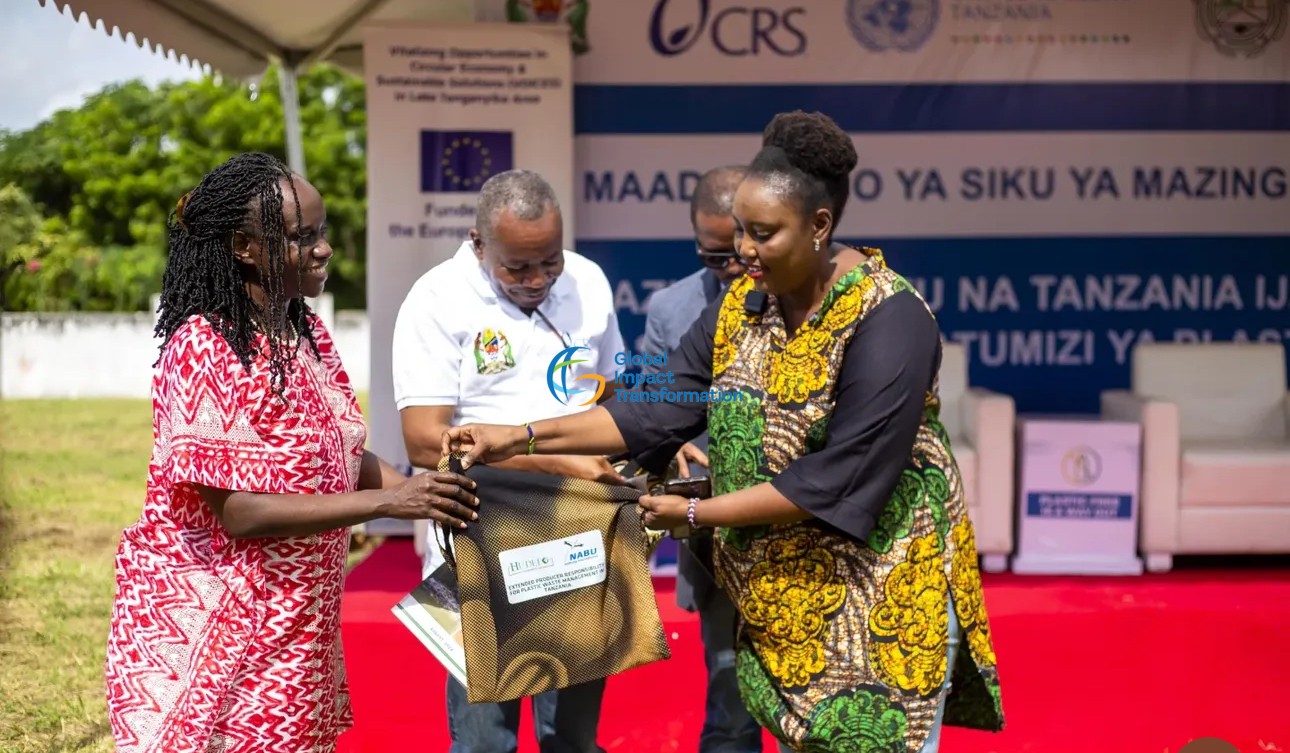
The campaign began with a powerful Walk and Pick activity a symbolic and hands-on call for collective responsibility. This was followed by a shoreline cleanup, climate exhibitions, and advocacy forums. Panel discussions focused on systemic solutions and the official launch of two milestone policy documents:
- The Extended Producer Responsibility (EPR) Report, and
- Tanzania’s National Strategy for Waste Management 2025–2030
These policy frameworks are critical for advancing sustainable waste governance in Tanzania. They align with GIT’s advocacy for upstream responsibility and circular economy solutions, ensuring waste is reduced at the source and not just downstream.
EPR provides a roadmap for data accountability across the waste value chain, tracking plastic use, disposal trends, and policy gaps. The National Strategy outlines a structured, long-term path to inclusive, climate-resilient, and circular waste management.
“Plastic pollution is a symptom of systemic neglect of both our ecosystems and our people,” said Hellen George, Communication Officer GIT. “This is about restoring dignity, reclaiming livelihoods, and defending the right to a clean and thriving environment.” she stressed.
Contributing to Africa’s Blue Economy and Global Commitments
The effort supports and reinforces key region and global frameworks, including the UN Decade on Ecosystem Restoration (2021–2030), the Africa Blue Economy Strategy, the AU Climate Resilience and Development Strategy (2022–2032), the 2030 Agenda for Sustainable Development, especially:
SDG 13: Climate Action
SDG 14: Life Below Water
SDG 15: Life on Land
Why Youth, Why Now?
GIT believes that youth are not the future of climate leadership, they are the present.
With Africa’s population expected to double by 2050, the continent’s young people represent both the greatest risk and the greatest opportunity for environmental transformation. When empowered with the right tools and platforms, they have the potential to lead scalable, context-specific solutions that mainstream climate resilience across all sectors.
GIT’s approach places young people not just as participants, but as co designers of environmental change.
To Partner with us to expand grassroots climate leadership, protect coastal ecosystems, and empower youth as champions of environmental justice
Contact: info@globalimpacttransformation.org