As Africa faces ongoing conflicts and security challenges, the role of young women in peace building has never been more critical.
Empowering Young Women in Peace Building
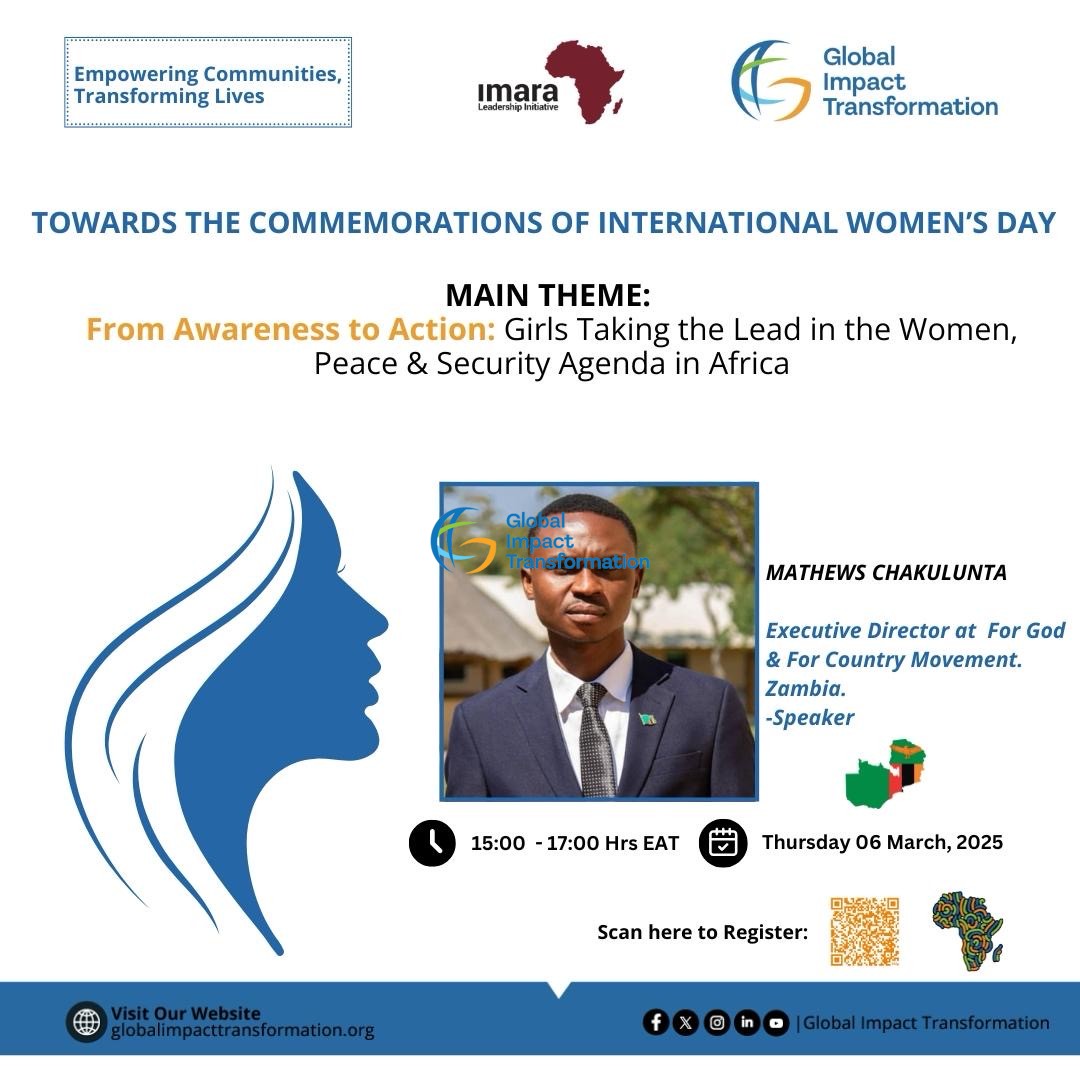
On March 6, 2025, , Global Impact Transformation (GIT), in collaboration with Imara Leadership Initiative, hosted a powerful dialogue focused on bridging the gap between awareness and action in the Women, Peace, and Security (WPS) agenda. Bringing together voices from nine African countries, the conversation shed light on the persistent challenges and the bold steps needed to empower young women in peace and security efforts.
The discussion identified key barriers preventing young women from fully participating in peace processes:
• Limited access to decision-making platforms in governance and security.
• Systemic challenges, including gender-based violence, exclusion, and societal stereotypes that undermine women’s leadership.
• Gaps in policy implementation, particularly in the WPS strategies of Tanzania and Mozambique.
Yet, despite these obstacles, young women are already leading at the grassroots level. What they need now is recognition, investment, and access to leadership spaces.
“Women are not just participants in peace building, they are leading it. We must move beyond tokenism and ensure they have the resources, access, and influence to drive real change.” - Petrider, Peace & Security Advocate
With rising political instability, border disputes, and violent extremism, the need for proactive engagement and preventive diplomacy is greater than ever.
“Women are the architects of peace. If we want long-term solutions, we must ensure their voices shape security frameworks, conflict resolution, and peace processes.” - Cremilda, Social Researcher & Communications Consultant, Mozambique
The dialogue highlighted:
• Tanzania’s progress in developing its National Action Plan on WPS, engaging multiple stakeholders.
• Mozambique’s efforts to increase women’s participation in leadership, though civil society involvement remains limited.
Panelists emphasized the need for stronger collaboration between civil society and governments to ensure that WPS commitments translate into real impact.
“It’s not enough to have policies on paper. We need real accountability, funding, and grassroots engagement to ensure implementation.” Sylvia Mkomwa, Moderator
The discussion also explored what it takes for young women to be effective leaders in peace and security.
“Confidence is important, but resilience is key. Young women must persist despite obstacles, push for inclusion, and take up leadership roles without waiting for permission.” - Matthew, Executive Director, For God and for Country Movement, Zambia
The Key recommendations for young women:
• Build strategic networks and alliances to amplify their voices.
• Pursue leadership training and mentorship in peace and security.
• Leverage digital advocacy to raise awareness and mobilize action.
The message was clear: Women don’t need permission to lead, they need platforms, resources, and recognition.
The conversation concluded with a clear roadmap to drive meaningful progress in the WPS agenda:
Next Steps for Key Stakeholders
• Civil Society Organizations - Actively contribute to Mozambique’s National Action Plan on WPS, ensuring stronger grassroots engagement.
• Young Women Advocates - Seek capacity-building opportunities and leadership training in peace and security.
• Government Institutions - Provide accurate data and statistics on women’s participation in peacekeeping and peace processes.
• Women-Led Organizations - Utilize digital platforms to advocate for women’s leadership in peace and security.
• Global Impact Transformation & Imara Leadership Initiative - Continue investing in grassroots-level WPS initiatives that drive real impact.
• Male Allies - Actively champion women’s leadership in peace and security efforts.
• Regional & International Platforms - Expand opportunities for young women to engage in policy dialogues, training, and leadership programs.
As the world marks International Women’s Day 2025, GIT and Imara Leadership Initiative reaffirm their commitment to equipping young women with the tools, platforms, and networks needed to lead Africa’s peace and security agenda.
Join the movement. Invest in young women. Empower the next generation of peace leaders.
Powered by Froala Editor