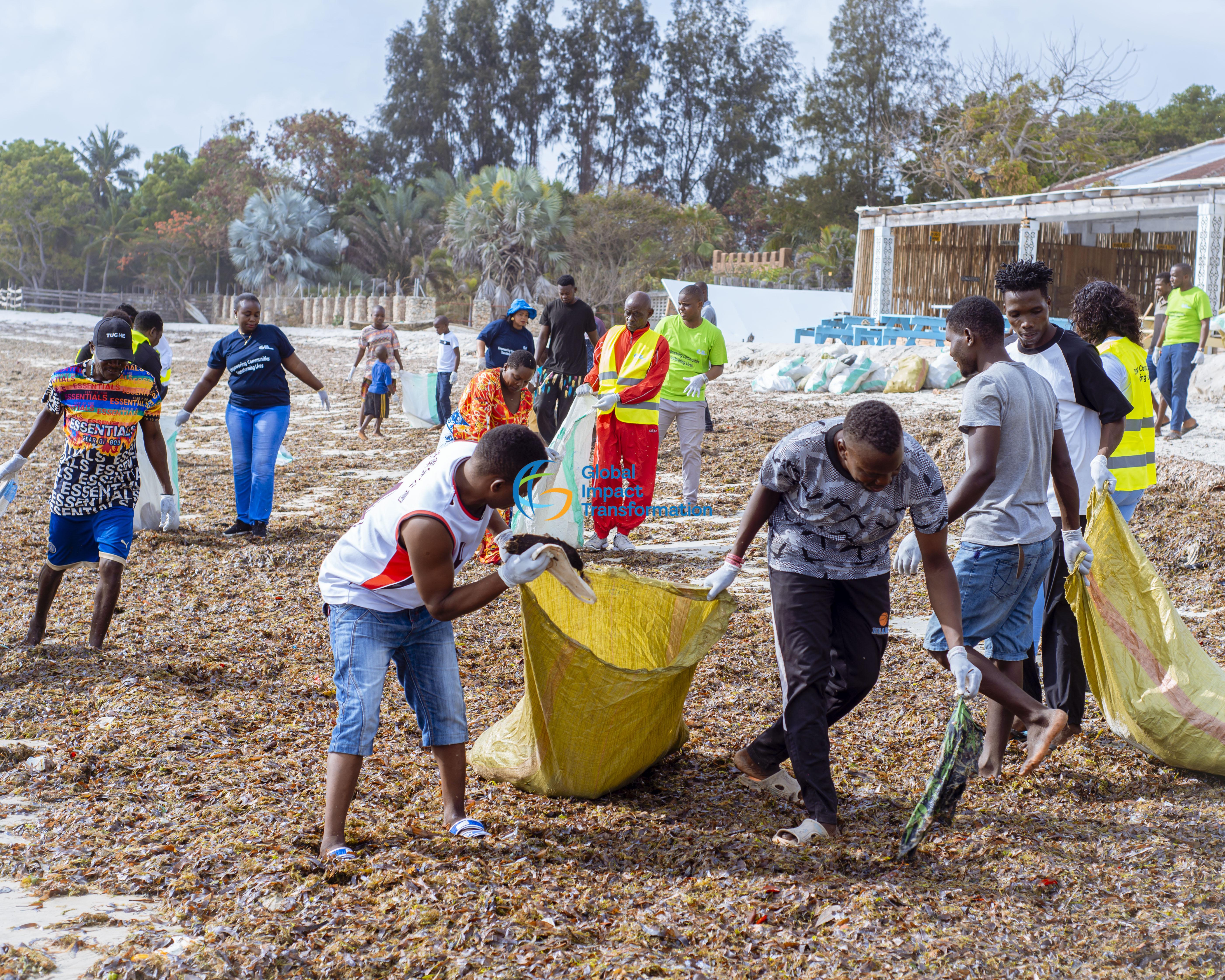
Global Impact Transformation (GIT), in collaboration with local leaders and environmental advocates, mobilized over 150 volunteers to remove more than 2 tons of waste and plant 100+ trees at Kidimbwi
Waves of Change: Kidimbwi Beach came together for a Greener, Safer Future
By our reporter
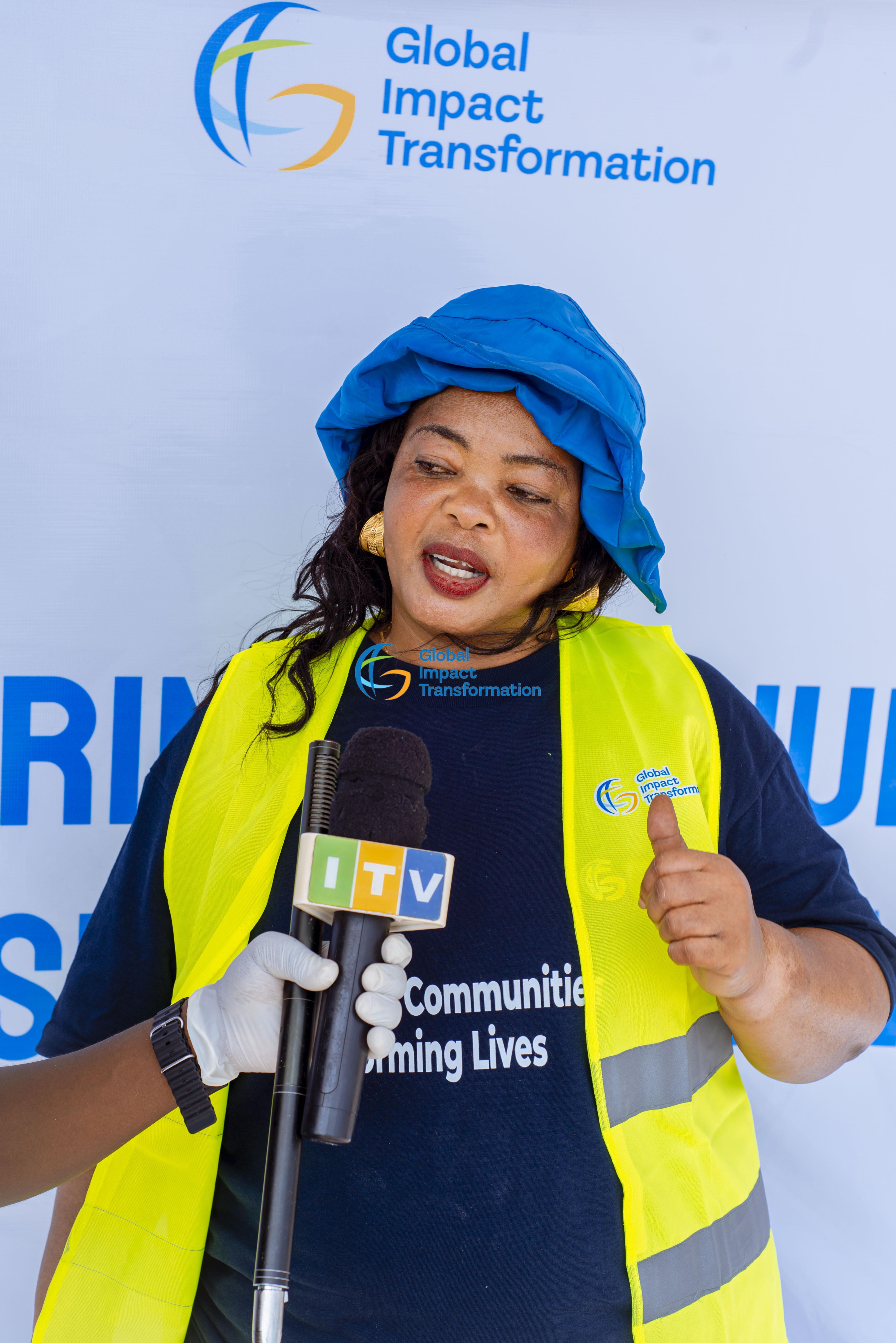
Beach Clean up series initiative aims to restore the coastline’s natural beauty and underscored the urgent need for environmental stewardship and social responsibility. Through addressing waste pollution, promoting climate action under Sustainable Development Goal (SDG) 13, and fostering community unity, the event highlighted the intersection of environmental sustainability and public safety, including gender based violence (GBV) concerns, aligning with SDG 5: Gender Equality. The clean up brought together a diverse group of participants, including local government leaders, students, environmental advocates, and GIT Champions. Ms. Sylvia Mkomwa, GIT’s Communication Specialist and General Manager at Caliber Group of Companies, officially inaugurated the event, emphasising the power of collective action. “When communities unite to protect their environment, we create ripples of change that extend beyond conservation. A cleaner, safer beach is not just about aesthetics, it’s about ensuring that everyone, especially women and children, can enjoy public spaces free from threats and vulnerabilities,” she stated.
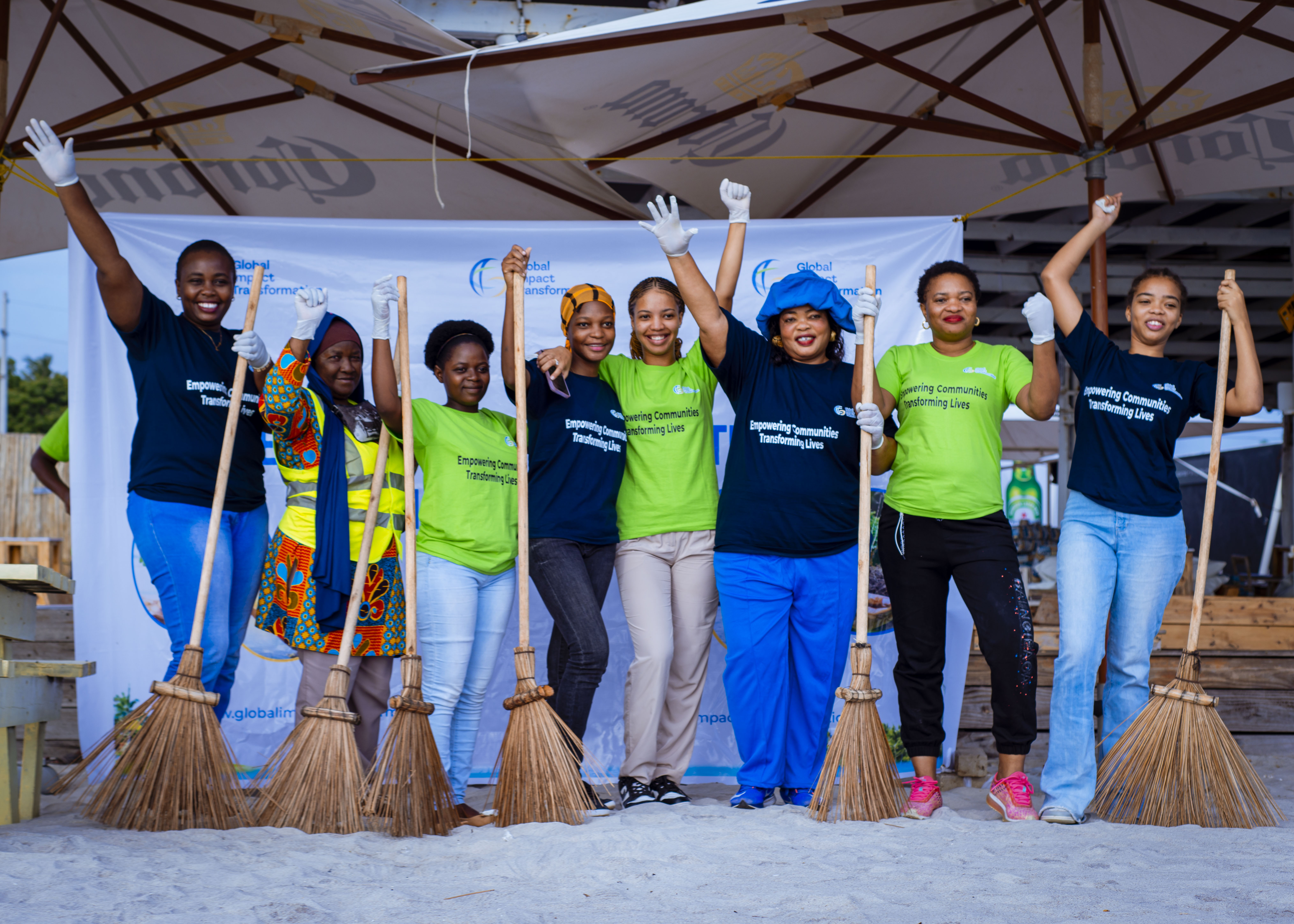
Volunteers engaged in two primary activities waste removal and tree planting. They collected plastic waste, discarded bottles, and other hazardous materials that endanger marine life and beachgoers. By eliminating these pollutants, the initiative improved safety, reduced health risks and rejuvenated the coastal ecosystem. In addition, trees were planted along the beachfront to prevent coastal erosion and enhance biodiversity. These efforts contribute to long term environmental sustainability, ensuring that future generations inherit a healthier planet. Beyond its ecological benefits, the clean up also served as a platform to address social challenges such as GBV and gender inequality, reinforcing SDG 5: Gender Equality. Polluted and neglected public spaces can become hotspots for insecurity, disproportionately affecting women and girls. Unsafe environments discourage free movement and limit access to recreational and economic opportunities. Moreover, women’s involvement in sustainability initiatives is a crucial step toward inclusive leadership and social transformation. The active participation of female leaders, volunteers, and youth in the Kidimbwi Beach Clean Up demonstrated that environmental advocacy can also serve as a tool for social empowerment and gender equality.
The success of the Kidimbwi Beach Clean Up serves as a reminder that maintaining clean and safe coastal areas requires sustained effort. Regular clean-up campaigns, environmental education programs, and stronger collaborations between stakeholders are key to preserving these achievements. As the event concluded, many participants expressed their commitment to making environmental conservation a lifestyle, not just a one-time effort. “A clean environment fosters not only ecological health but also human dignity and security,” one volunteer remarked. Intertwining environmental action with social advocacy, the Kidimbwi Beach Clean Up exemplifies how local initiatives can drive meaningful, lasting change one wave at a time. By turning global commitments into local action, this effort strengthens community resilience, gender equality, and sustainable development, directly contributing to the United Nations’ agenda for a healthier planet and a more just, inclusive future for all.