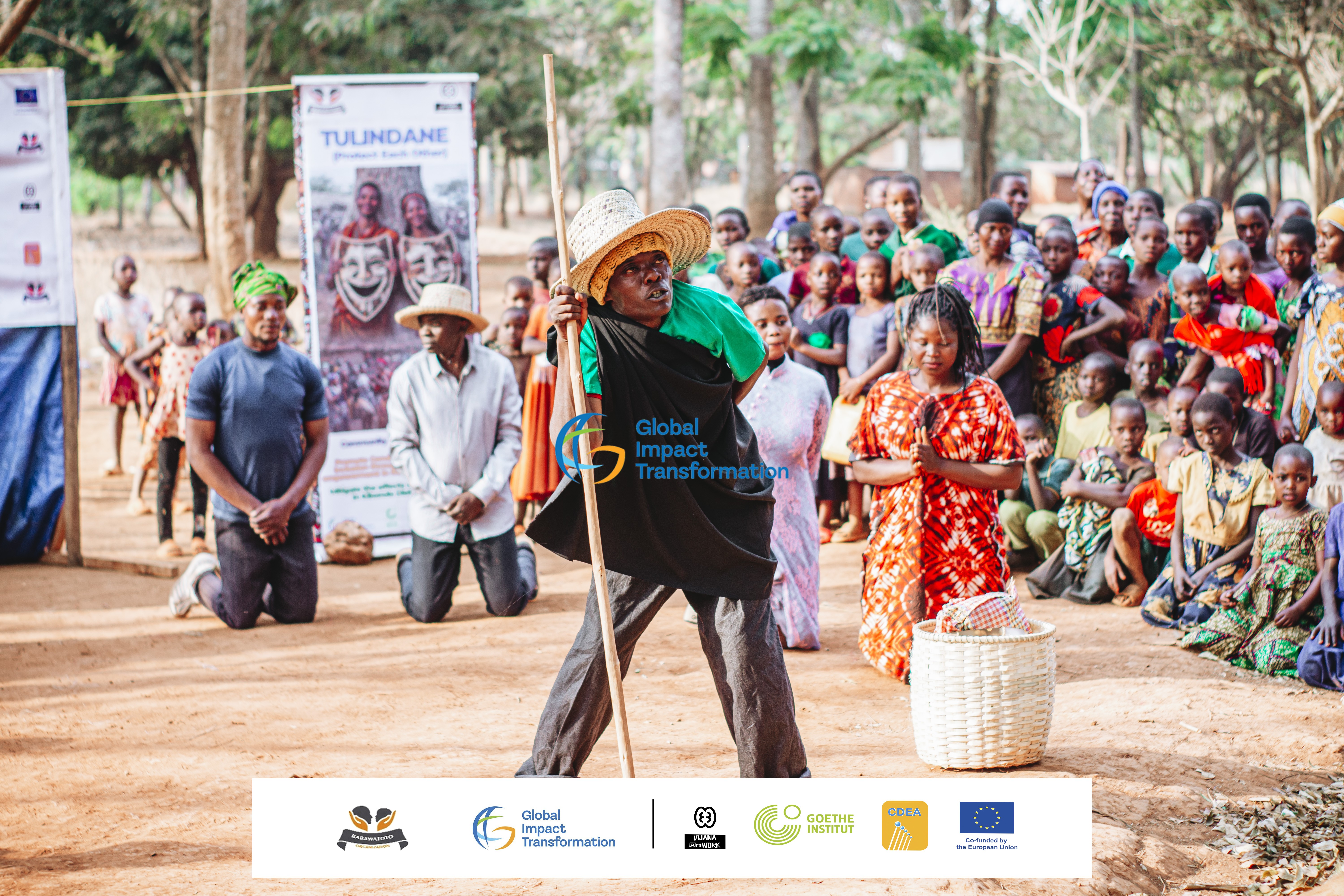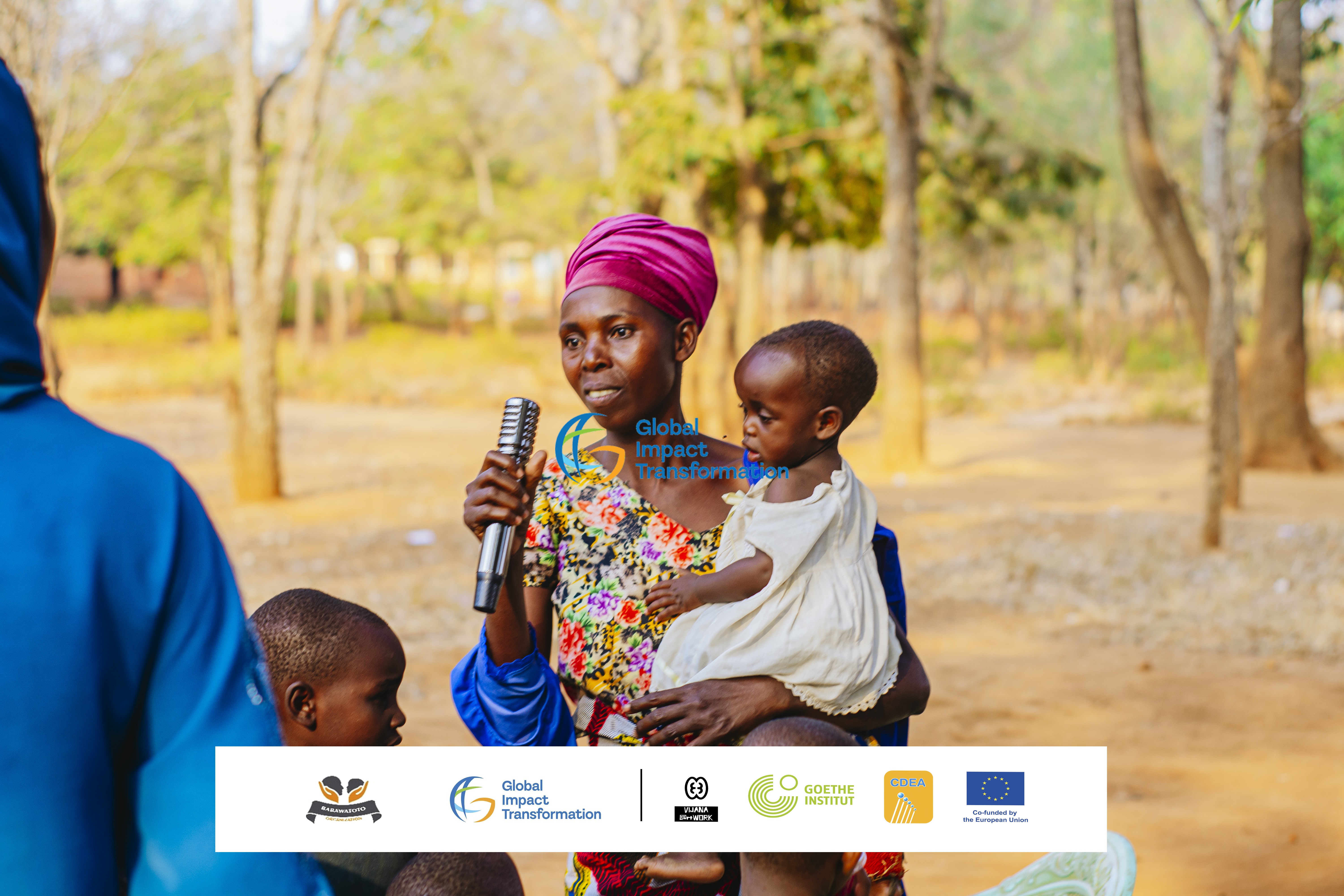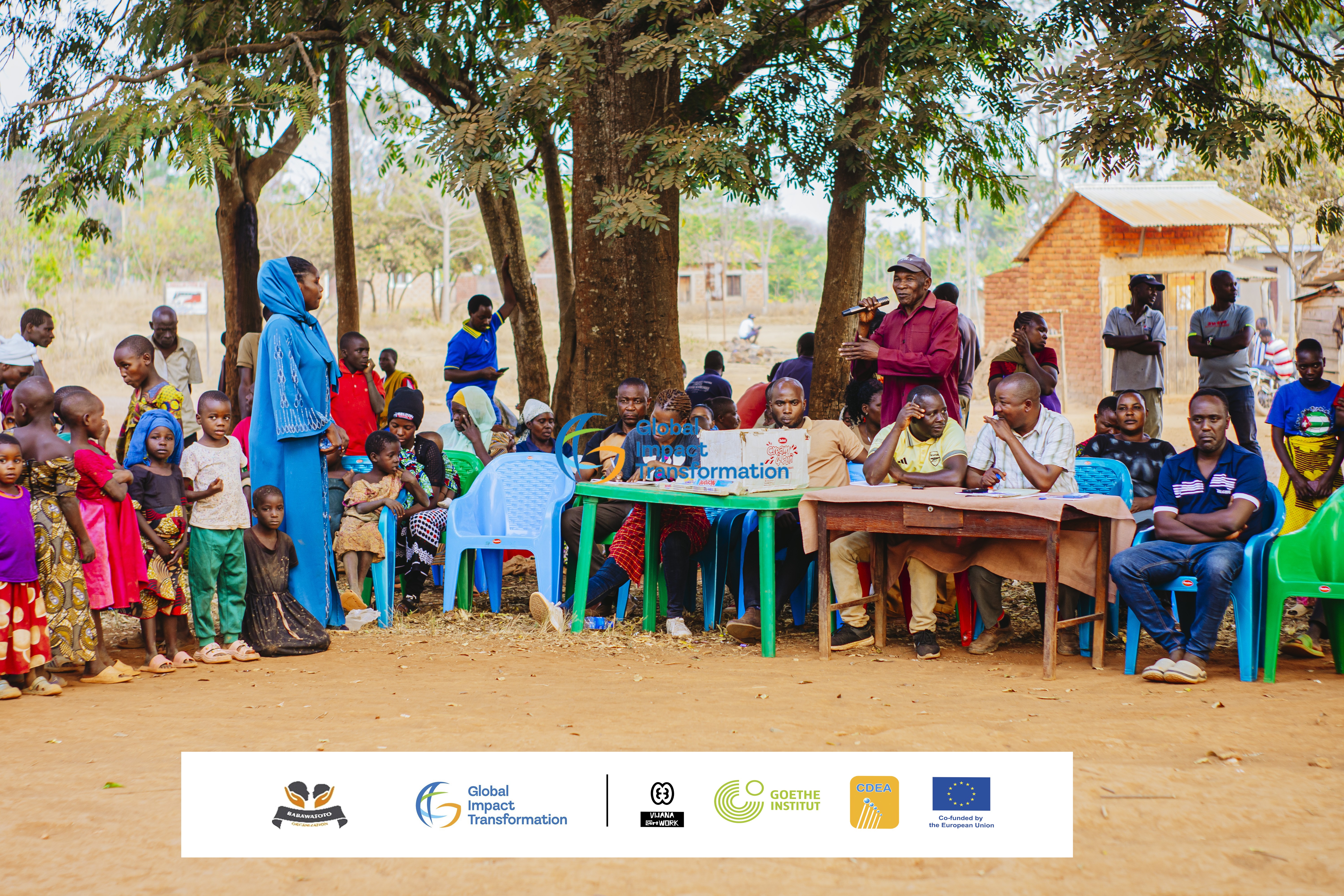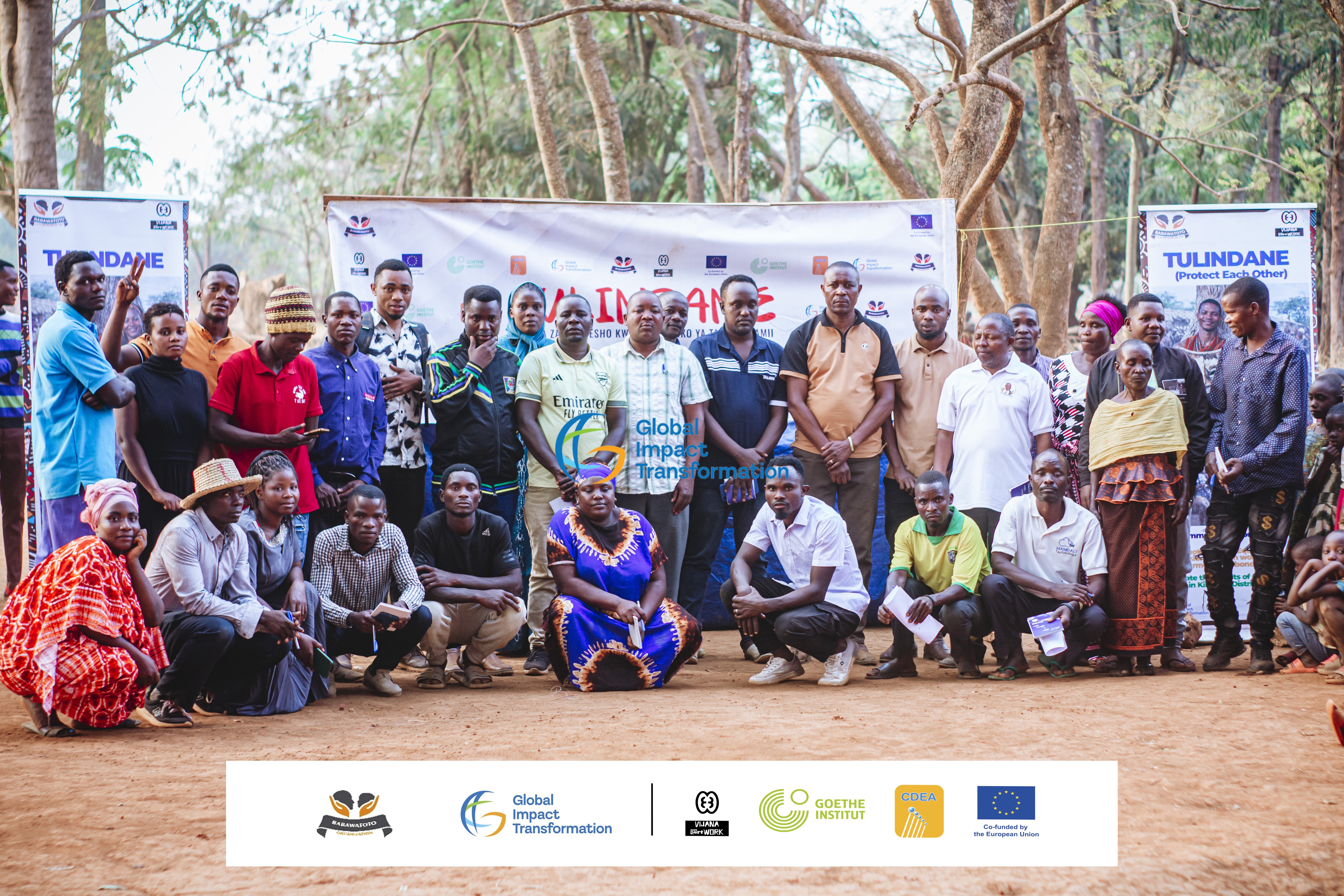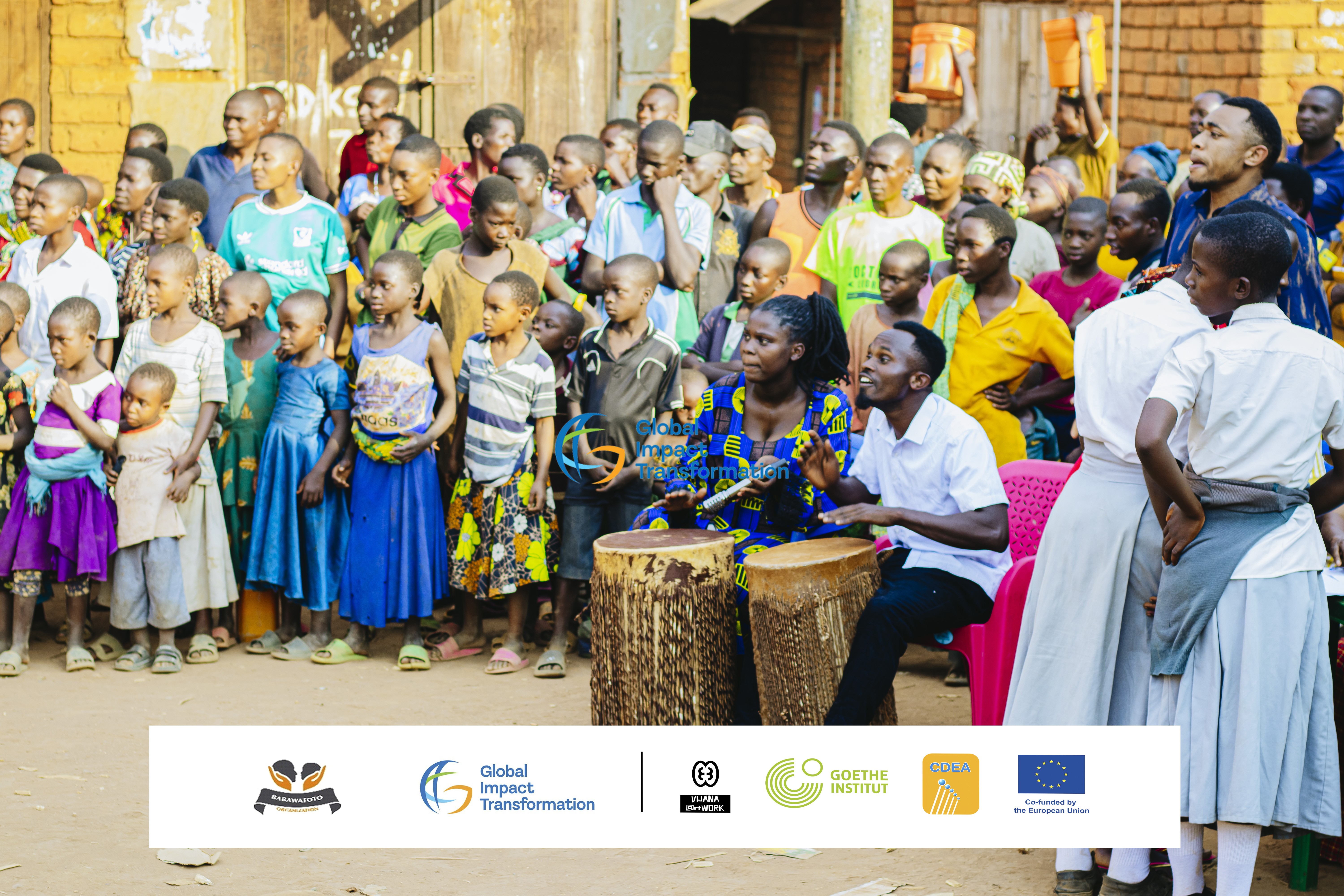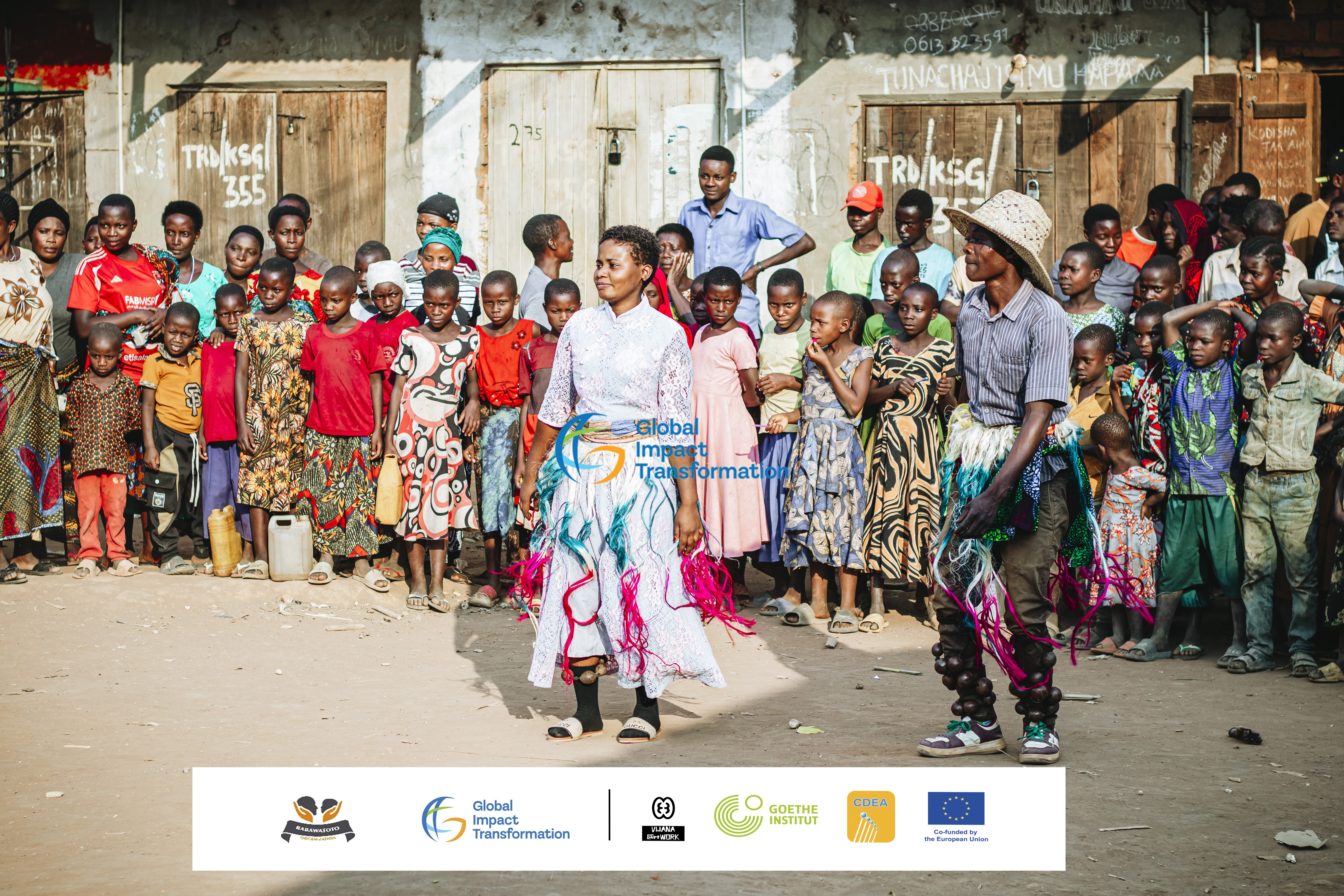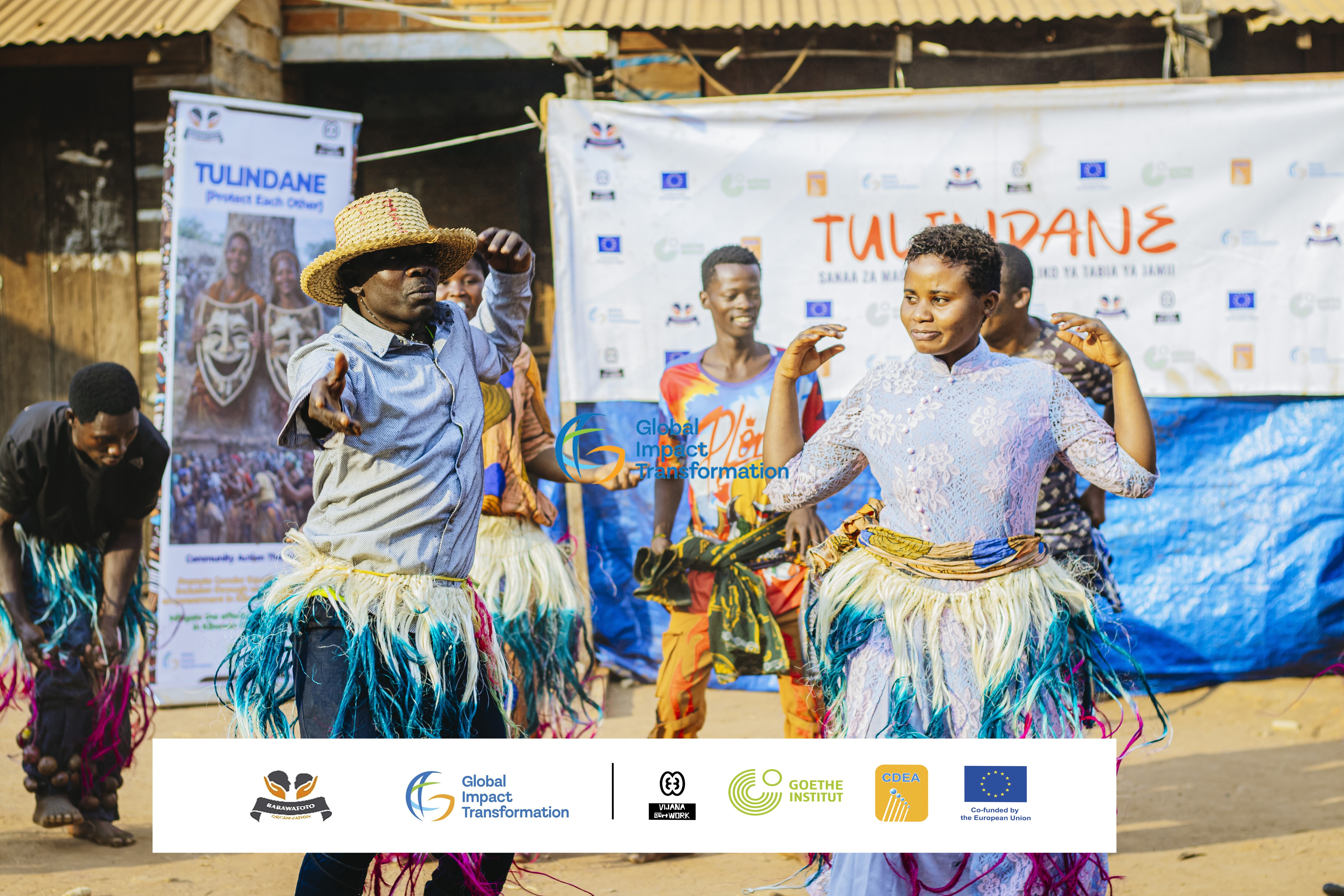
In Kigoma, creative expression is becoming a powerful vehicle for community engagement. Through theatre, storytelling and locally rooted dialogue, women and youth are bringing lived experiences into the public conversation opening space to address issues that are often complex, sensitive and deeply connected to everyday life. Implemented by Babawatoto Organization (BAO) in partnership with Global Impact Transformation (GIT) the Tulindane Project is bringing together creative arts, community participation and local leadership to strengthen responses to gender-based violence (GBV), gender inequality and climate-related vulnerabilities. This growing grassroots engagement marks a significant phase for Tulindane “Let’s Protect Each Other”, as the program continues to strengthen local leadership and create opportunities for communities to participate more meaningfully in shaping responses to the challenges affecting them. At the heart of this approach is the belief that lasting solutions are stronger when they are informed by local realities, shaped through participation and owned by the communities themselves. As Tulindane advances, arts and storytelling are helping turn individual experiences into shared conversations and shared conversations into a foundation for collective action.
Turning community voices into locally led solutions
By Communication team
The Tulindane Project continues to gain momentum in Kigoma, with women and youth playing a central role in community engagement around the interconnected challenges of gender-based violence (GBV), gender inequality and climate-related vulnerabilities.
As implementation progresses, the program is moving beyond its initial capacity-strengthening phase into deeper engagement with communities. Through Community Action Theatre, storytelling, facilitated dialogue and other participatory approaches, Tulindane is creating spaces where women, youth and other community members can openly discuss issues affecting their everyday lives, reflect on harmful social norms and practices, and contribute to locally appropriate responses.This marks an important stage in the program's implementation: translating strengthened local capacity into meaningful community participation, dialogue and locally led action.
The significance of this progress extends beyond the numbers reached. The local artists are now applying their skills within communities, helping create platforms where sensitive and sometimes difficult issues can be explored in ways that are accessible, culturally relevant and grounded in people's lived experiences.Through performances reflecting situations familiar to community members, participants are encouraged not simply to observe, but to engage asking questions, sharing experiences, examining attitudes and discussing possible responses. This participatory approach enables communities to become part of the conversation rather than remaining passive recipients of information.
For women and youth in particular, these spaces provide an important opportunity to bring their experiences and perspectives into community discussions. Tulindane recognizes them not only as program participants, but as knowledge holders, local leaders and contributors to solutions within their communities. At the same time, the program engages the wider community because progress on GBV prevention, gender equality and resilience cannot be achieved by women and youth alone. Families, men and boys, community leaders and other local actors all have important roles in creating safer and more inclusive environments.Tulindane is therefore helping to strengthen a shared understanding that protection, equality and resilience are collective responsibilities.
A key feature of the program is its recognition that the challenges facing communities are interconnected. Climate-related pressures can affect livelihoods, household income, food security and access to natural resources. These pressures can interact with existing social and economic inequalities and affect different groups in different ways.
Through community dialogue, Tulindane provides a platform for these connections to be explored from the perspective of the people experiencing them. This helps ensure that program engagement remains grounded in local realities and that community perspectives contribute to identifying priorities and possible responses.The approach also recognises that sustainable outcomes require more than raising awareness. Information is important, but communities also need opportunities to reflect, participate, build consensus and identify actions they can own and advance themselves.
This is where Community Action Theatre and participatory dialogue become particularly valuable. Creative approaches can help open conversations around issues that may be difficult to discuss through conventional meetings. They allow participants to see familiar situations represented, consider different perspectives and explore alternative responses in a shared environment.
By strengthening the capacity of local actors to facilitate these processes, Tulindane is also investing in knowledge and skills that remain within the communities where the program is being implemented.
From Community Dialogue to Locally Led Action
As implementation advances, Tulindane is increasingly focused on translating the conversations taking place within communities into practical, locally owned responses and collective action.
The community engagement process is helping surface priority concerns, identify barriers and provide space for women, youth and other community members to discuss what can realistically be addressed at individual, household and community levels and where engagement with local structures and other stakeholders may be required.Rather than introducing predetermined answers, the program seeks to strengthen community agency and ownership. This means recognizing that communities themselves have important knowledge about their circumstances and should have meaningful opportunities to shape the responses intended to support them.
Women and youth remain central to this process. Strengthening their participation and leadership helps ensure that their perspectives are represented in conversations about community priorities while also building their confidence and capacity to contribute to locally led responses.
The program's approach can therefore be understood as a progression:
Awareness → Dialogue → Participation → Local Ownership → Collective Action
Each stage builds on the previous one. Awareness creates understanding; dialogue allows different experiences to be heard; participation brings communities into the process; ownership strengthens responsibility; and collective action provides a pathway for locally identified priorities to move forward.
As activities continue, insights emerging from community engagement will help inform subsequent stages of implementation, including deeper dialogue, consensus-building and locally identified actions. The program will continue to learn from what communities are saying, what approaches are generating engagement and what additional support may be required to strengthen sustainable local responses.
This learning dimension is particularly important. Tulindane is not only delivering activities; it is generating practical experience about how creative, participatory and community-led approaches can contribute to addressing GBV, advancing gender equality and strengthening climate resilience within vulnerable communities.
At the same time, strengthening community ownership helps move program implementation beyond short-term activities. Skills, knowledge, relationships and locally generated solutions can provide a foundation for continued engagement beyond individual performances or dialogue sessions.
For Global Impact Transformation (GIT) and its partners, this is an important part of the program's broader ambition: strengthening approaches that are locally rooted, inclusive and responsive, while ensuring that women and youth have meaningful roles in shaping safer and more resilient communities.
As Tulindane progresses in Kigoma, the focus will remain on deepening community participation, strengthening local leadership and translating dialogue into practical action. The experiences and lessons emerging from implementation will also provide an important foundation for continued programming and learning around the intersection of GBV prevention, gender equality and climate resilience.
Tulindane – “Let’s Protect Each Other” – is demonstrating what becomes possible when local voices are heard, women and youth are meaningfully engaged, and communities are given the space to move from conversation towards locally owned solutions. The journey continues in Kigoma, with each engagement strengthening the foundation for safer, more inclusive and climate-resilient communities.