Global Impact Transformation (GIT), through its flagship Women’s Empowerment for Livelihoods and Leadership (W.E.L.L.) Program, is advancing women-led green enterprises across Tanzania by transforming locally available waste into sustainable economic opportunities. Implemented across Mtwara, Tanga, Dar es Salaam, and Bagamoyo (Pwani), the W.E.L.L. Program has established and continues to support four women-led groups, equipping women and girls with practical skills in eco-friendly charcoal production and organic soap-making through a structured Training of Trainers (ToT) approach. These initiatives are enabling women not only to generate income, but also to lead community-based solutions that address environmental challenges, strengthen household resilience, and expand economic opportunities for other women and girls. Through peer learning and knowledge transfer, trained participants are extending skills within their communities, creating a multiplier effect that amplifies impact beyond direct beneficiaries. By converting waste into value and knowledge into opportunity, GIT is strengthening pathways for inclusive economic empowerment, climate-responsive livelihoods, and women’s leadership at the grassroots level.
Women transforming waste into opportunity, leadership, and sustainable livelihoods
By Communication team
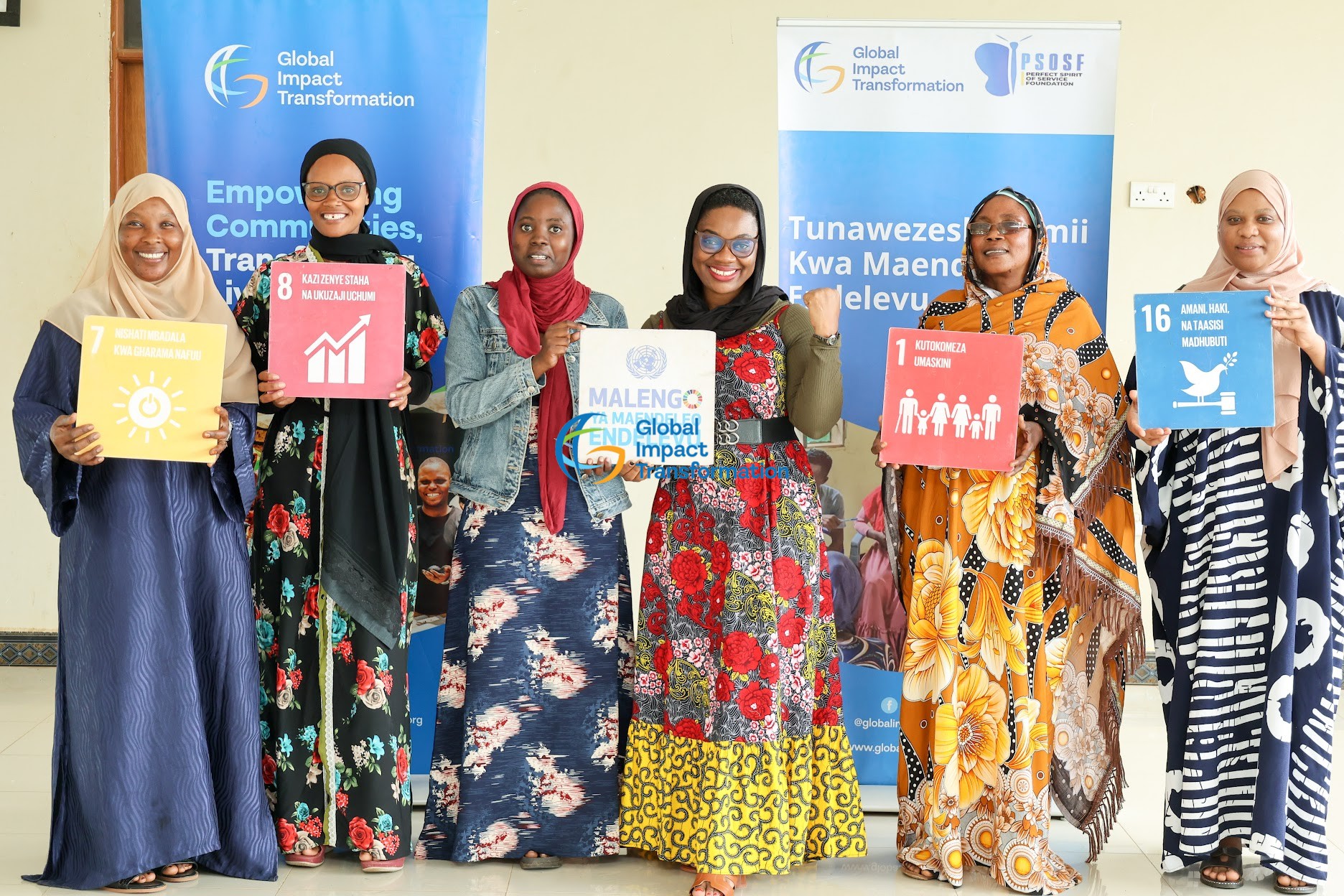
Located in Mtwara Region along the Tanzania–Mozambique border, Global Impact Transformation (GIT) established and continues to support the TUPAMBANE Women’s Group, one of four women-led groups formed under the Women’s Empowerment for Livelihoods and Leadership (W.E.L.L.) Program. The group, composed entirely of women and girls, operates under the mentorship and technical supervision of GIT and represents a strong model of grassroots women’s leadership, collective entrepreneurship, and community-driven enterprise development.
Through the Training of Trainers (ToT) model, members of the group were equipped with practical, market-relevant skills in Production of eco-friendly charcoal using locally available waste materials and Manufacturing of organic soaps using accessible, low-cost inputs This structured approach ensures that knowledge is not limited to direct participants. Members of the TUPAMBANE group have gone on to train other women and girls within their communities, extending skills, strengthening local capacity, and expanding access to sustainable livelihood opportunities.
Storytelling as a Tool for Learning, Voice, and Leadership
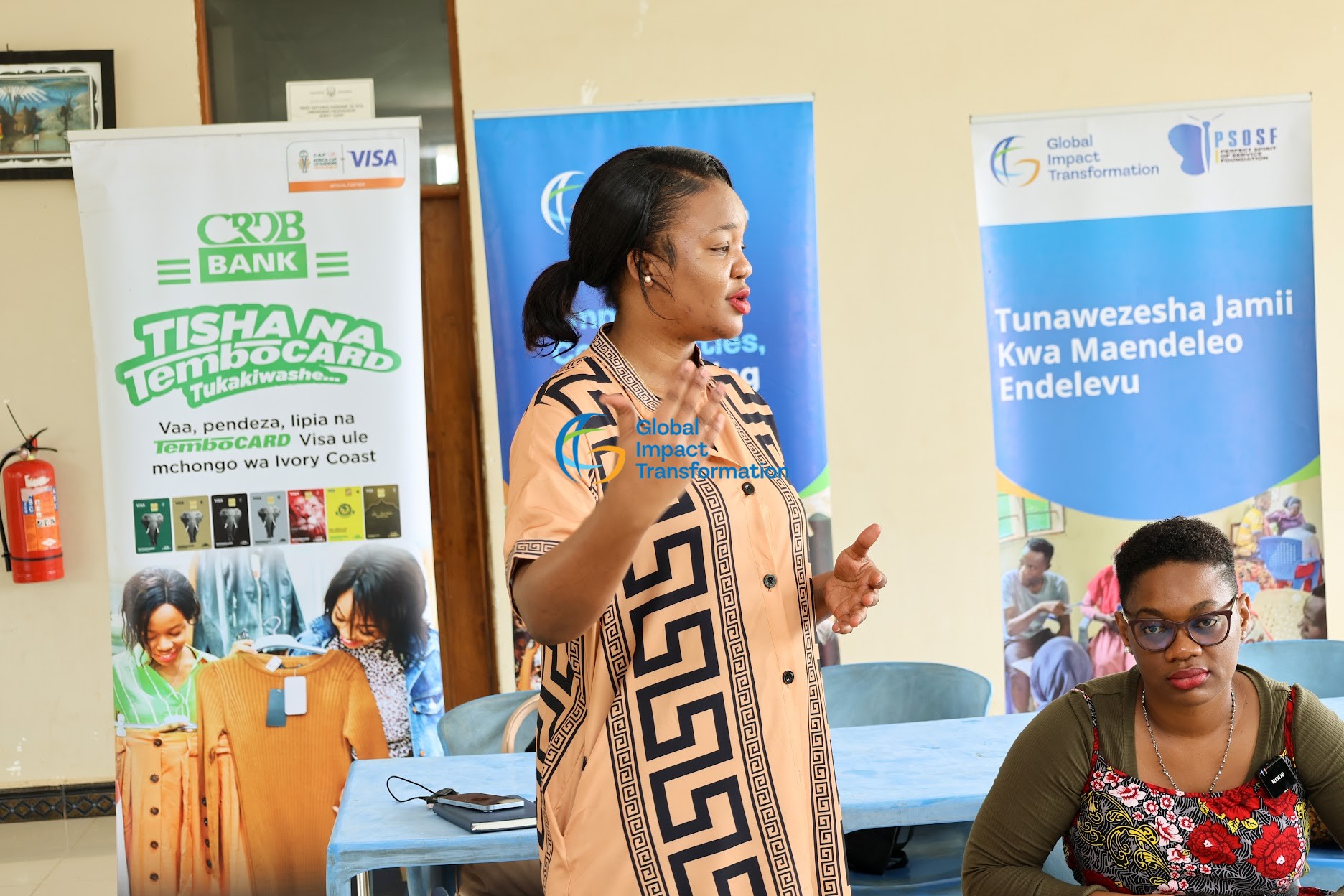
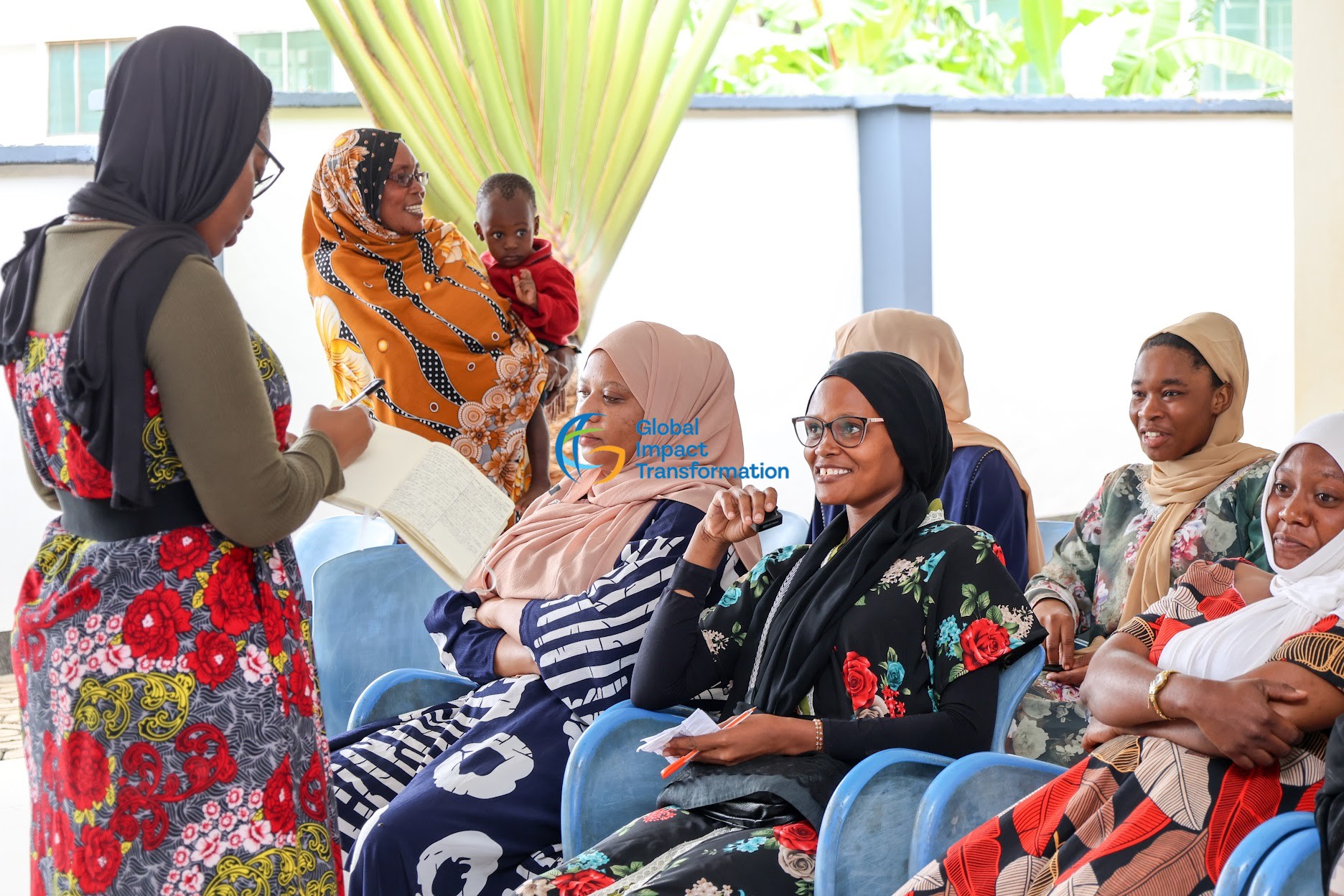
As part of its community engagement approach, GIT integrates storytelling as a participatory method to strengthen women’s voice, leadership, and peer learning. During engagement sessions, women shared lived experiences related to entrepreneurship, income challenges, and strategies for sustaining their households. These storytelling spaces enabled participants to reflect, learn from one another, and identify practical solutions grounded in their own realities. Through storytelling, GIT elevates grassroots women’s voices and lived experiences, strengthens confidence and leadership identity, facilitates peer-to-peer learning and knowledge exchange and encourages collective problem-solving within communities This approach ensures that interventions are community-driven, context-responsive, and inclusive, aligning with global best practices on grassroots engagement and women’s empowerment.
The TUPAMBANE Women’s Group demonstrates the effectiveness of collective entrepreneurship and women-led community structures in expanding economic opportunities and strengthening local resilience. By working collaboratively, members share skills and production techniques, strengthen coordination and collective savings practices, improve access to local markets, and support one another in overcoming economic challenges. This collective model has enhanced their capacity to sustain income-generating activities, build financial stability, and strengthen women’s leadership, while also improving the wellbeing of their families and contributing to broader community-level economic participation and inclusive development. This model highlights the importance of investing in scalable, community-based solutions that are led by women and rooted in local knowledge.
Voices from the Community: “Through this group, we have gained knowledge, confidence, and skills that help us improve our livelihoods, we are now able to train other women and support each other to grow together.” Fatuma Saidi, member, TUPAMBANE Women’s Group, Mtwara
Through the W.E.L.L. Program, Global Impact Transformation (GIT) is strengthening pathways for women’s economic participation, leadership, and resilience across multiple regions in Tanzania. By integrating skills development and a structured Training of Trainers (ToT) approach, green entrepreneurship, climate-responsive solutions, storytelling, peer learning, collective organizing, and mentorship, GIT equips women with practical tools to build sustainable livelihoods. Beyond improving income, these interventions position women as leaders of community-driven solutions that promote environmental sustainability, economic inclusion, and long-term resilience for both households and communities. This approach demonstrates that investing in grassroots women’s leadership is critical to advancing inclusive development and building sustainable local economies.
Call for Partnerships
Global Impact Transformation (GIT) welcomes collaboration to expand women-led initiatives and strengthen inclusive, community-driven entrepreneurship and sustainable livelihood opportunities across Tanzania.
Through collaboration, we aim to scale practical solutions that enhance economic participation, build resilience, and support women and girls to lead locally driven development efforts.
For partnerships and collaboration:
info@globalimpacttransformation.org