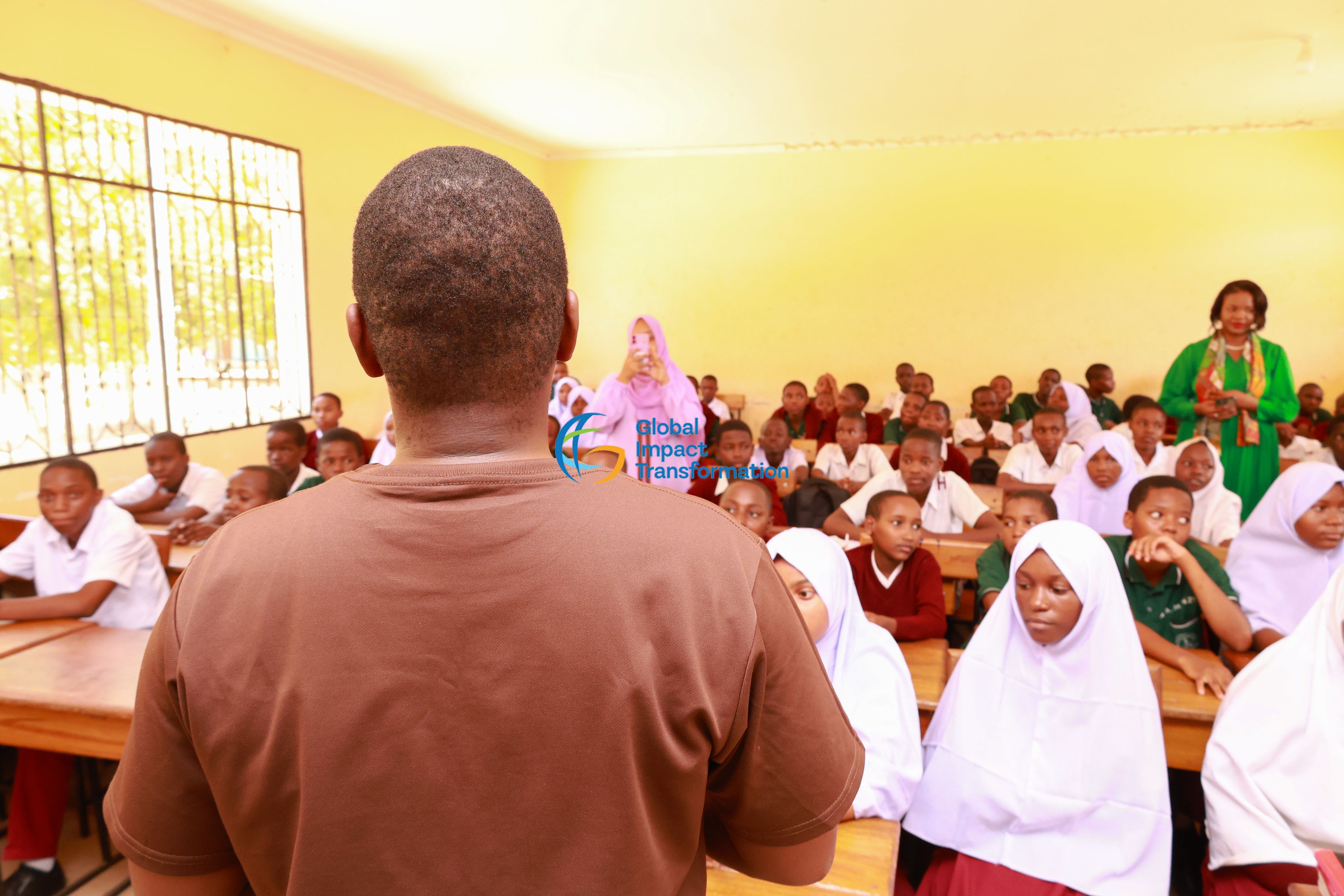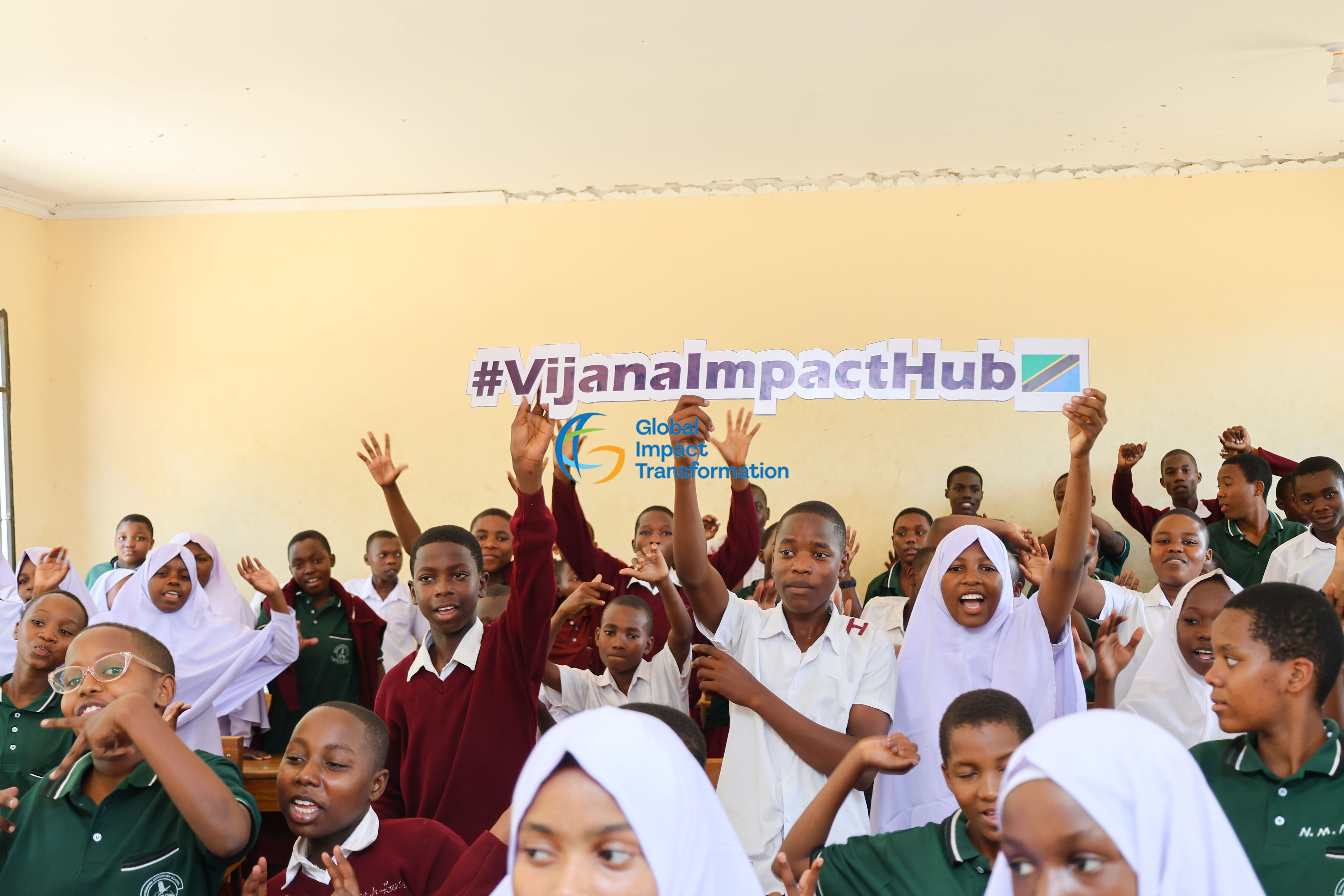
Recently, Global Impact Transformation (GIT), in partnership with Yana Corp, advanced the national expansion of the VIJANA IMPACT HUB through a high-impact digital innovation workshop at Kiwangu Secondary School in Pwani Region. This engagement forms part of a structured scale-up strategy aimed at equipping young people with practical digital competencies, Artificial Intelligence literacy, and entrepreneurship pathways aligned with Tanzania’s evolving economic and technological landscape. The expansion into Pwani Region builds upon the formal launch of the initiative in Dar es Salaam and subsequent implementation engagements in Arusha, including sessions at Ilboru Secondary School and the Institute of Social Work. Collectively, these milestones signal a deliberate shift from strategic framework development to sustained, school-level implementation reinforcing GIT’s commitment to strengthening youth economic resilience and innovation capacity nationwide.
Addressing Youth Unemployment in an AI-Driven Economy
By Communication team
Tanzania’s youth population represents one of the country’s greatest assets yet it also reflects one of its most urgent development challenges. Youth unemployment and underemployment continue to limit economic participation, particularly among secondary school graduates and young people transitioning into higher education or the labor market. At the same time, rapid digital transformation and the rise of Artificial Intelligence (AI) are reshaping global economies, redefining skill requirements, and widening the gap between traditional education systems and emerging workforce demands. Youth unemployment in Tanzania is not merely a question of job scarcity, it is increasingly a question of skills mismatch. While young people complete secondary and tertiary education, many lack exposure to digital competencies, applied innovation methodologies, entrepreneurship training, and Artificial Intelligence literacy that are becoming essential in modern labor markets.
Globally, Artificial Intelligence and automation are rapidly transforming industries including finance, agriculture, health, logistics, communication, and public administration. As economies become increasingly technology-driven, access to digital competencies is no longer optional, it is foundational. Without early exposure to digital tools, innovation ecosystems, and responsible AI literacy, young people risk exclusion from emerging economic opportunities and widening participation gaps in future labor markets.
The VIJANA IMPACT HUB responds to this structural challenge by equipping young people with foundational digital literacy, strengthening their understanding of ethical and responsible Artificial Intelligence use, and cultivating applied innovation and problem-solving competencies. The initiative further promotes entrepreneurial
By integrating technology with enterprise pathways, the initiative seeks to strengthen economic resilience and position youth as creators of opportunity rather than passive job seekers.
Why Artificial Intelligence and Why Now?
Artificial Intelligence is no longer a distant technological concept, it is rapidly becoming embedded in everyday systems that influence employment, productivity, and access to opportunity. Early exposure to AI tools and digital innovation enables young people to understand not only how to use technology, but how to shape it responsibly. The timing of the VIJANA IMPACT HUB expansion is therefore critical. As Tanzania advances its digital economy agenda and regional markets become increasingly competitive, building youth capacity in AI and innovation is both a development necessity and an economic imperative.
By introducing structured digital exposure at the secondary school level, GIT is contributing to long-term national competitiveness, economic diversification, and inclusive digital participation.
The timing of the VIJANA IMPACT HUB expansion is therefore critical. As Tanzania advances its digital economy agenda and regional markets become increasingly competitive, building youth capacity in AI and innovation is both a development necessity and an economic imperative. Structured digital exposure at the secondary school level contributes to long-term national competitiveness, economic diversification, and inclusive participation in future labor markets.
The recent workshop in Pwani Region engaged 98 secondary school students, of whom 67 percent were female students and young women, and 33 percent were male participants, including students with disabilities. This gender-responsive participation reflects GIT’s commitment to inclusive access and ensuring that young women and marginalized groups are meaningfully represented in emerging digital and Artificial Intelligence learning spaces.
“This session changed how I see technology. It is not just for entertainment ,it can help us learn, innovate, and build our future.” said
Mwanaisha Othamn, Student Participant
Participants engaged in interactive sessions that combined digital exploration with innovation dialogue. Students examined how technology can support entrepreneurship, enhance productivity, and address community-level challenges. The energy and engagement demonstrated throughout the session reflected a clear demand for structured digital ecosystems within secondary education environments. Students actively contributed ideas, participated in collaborative challenges, and expressed interest in continued mentorship and innovation opportunities
This momentum reinforces the importance of sustained follow-up engagements designed to transform awareness into measurable skill development.
Sustainability Through Ecosystem Building
The VIJANA IMPACT HUB is designed not as a one-time intervention, but as a scalable platform rooted in partnership and institutional continuity. By engaging secondary schools, higher learning institutions, and regional education stakeholders, GIT is strengthening a multi-level ecosystem that supports youth from early exposure to advanced application.
This ecosystem approach ensures:
- Institutional buy-in
- Regional inclusivity
- Gender-responsive participation
- Long-term mentorship structures
- Responsible and ethical technology engagement
The Pwani engagement forms part of a broader national scale-up strategy targeting 4,000 in-school and out-of-school youth by December 2026. Through phased implementation across regions, the initiative seeks to reduce digital exclusion, strengthen entrepreneurship pathways, and contribute meaningfully to youth employment solutions. By linking Artificial Intelligence, innovation, and economic empowerment, Global Impact Transformation continues to align youth development programming with national priorities and global technological trends.
Addressing youth unemployment in the digital era requires coordinated action across sectors. Governments, educational institutions, civil society organizations, technology actors, and private sector stakeholders must collaborate to build resilient youth innovation ecosystems. Global Impact Transformation invites partners committed to advancing digital inclusion, AI literacy, and youth economic empowerment to join this expanding initiative.
For collaboration and partnership inquiries, please contact:
info@globalimpacttransformation.org