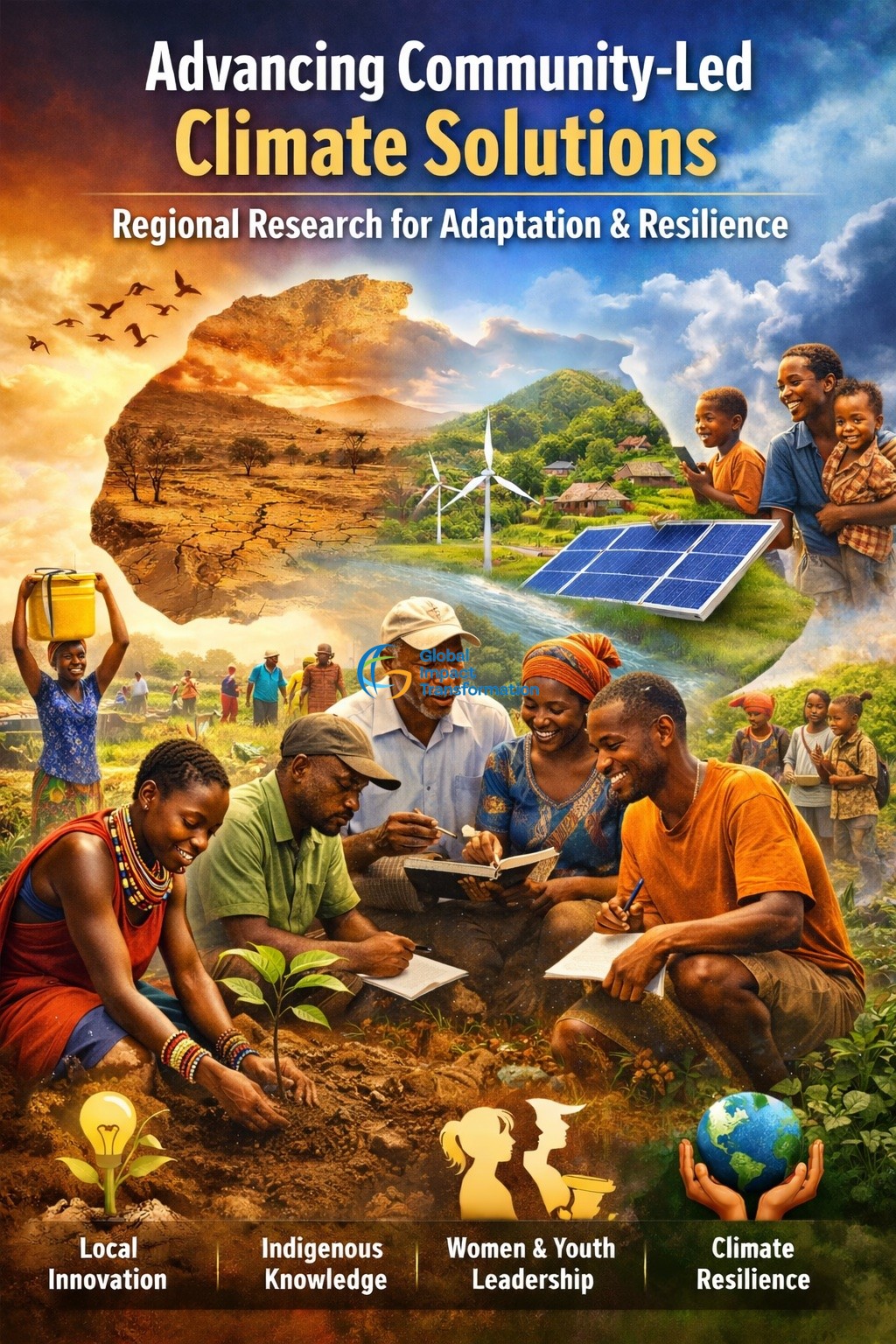
Global Impact Transformation (GIT) is pleased to announce the launch of a regional research initiative focused on documenting gender-responsive, community-led climate adaptation and locally driven innovations across some of Africa’s most climate-vulnerable contexts. Officially launched in December 2025, the initiative advances GIT’s commitment to locally led, inclusive, and evidence-informed climate action, elevating frontline solutions and gender-responsive approaches that strengthen resilience and inform policy and programming at local, national, and regional levels. The research is being implemented in Tanzania, Kenya, Ethiopia, Burundi, the Democratic Republic of Congo (DRC), and Mozambique, in close collaboration with national and community-based non-governmental organizations (NGOs), local researchers, and civil society partners in each country. This partnership-driven approach ensures that the research process is context-sensitive, participatory, and grounded in local expertise, while strengthening local ownership and generating credible, actionable evidence to inform climate policy, programming, and investment
Elevating Community-Led Climate Innovation
By Communication team
Climate change continues to pose one of the greatest threats to sustainable development in Africa. According to the Intergovernmental Panel on Climate Change (IPCC, 2022), Africa is warming faster than the global average, with increasing frequency and intensity of droughts, floods, and heatwaves. These impacts are already undermining food security, water availability, public health, and economic stability across the continent. The World Bank’s Tanzania Country Climate and Development Report (2024) further highlights that climate change is expected to reduce agricultural productivity, exacerbate water scarcity, and increase vulnerability among rural and urban poor communities particularly women, youth, and smallholder farmers.
Despite these challenges, communities across Africa are actively developing local, low-cost, and context-specific solutions to adapt to climate impacts. However, many of these innovations remain undocumented and underrepresented in policy frameworks and climate financing mechanisms.
This research initiative seeks to bridge that gap by systematically documenting grassroots climate adaptation practices and amplifying the voices of communities who are leading change on the frontline of climate impact.
The study will focus on:
- Community-driven climate adaptation strategies
- Indigenous and traditional knowledge systems
- Youth- and women-led climate innovations
- Locally developed solutions for water, food, and environmental security
- Social and economic resilience approaches
By capturing these experiences, the research aims to strengthen evidence for locally led climate action, promote inclusive development, and inform policies that respond to real community needs.
The initiative aligns with global commitments including:
- The Paris Agreement (2015)
- The UN Framework Convention on Climate Change (UNFCCC)
- The 2030 Agenda for Sustainable Development
- The principle of Leave No One Behind
The findings from this study will play a critical role in strengthening climate action at multiple levels. The research will contribute to informed national and regional climate policy dialogue by generating evidence grounded in community realities and locally proven solutions. It will support the design and implementation of community-centered, scalable climate programming that responds to the needs of populations most affected by climate change. In addition, the study will feed into knowledge-sharing and learning platforms, facilitating cross-country exchange of best practices and innovative approaches. Importantly, the documentation of successful community-led interventions will provide a foundation for replication and adaptation in other countries facing similar climate risks and socio-economic challenges, thereby advancing inclusive, locally led climate action and accelerating progress toward resilient and sustainable development outcomes.
Looking Ahead
Over the coming months, Global Impact Transformation will work in close collaboration with community partners, researchers, and key stakeholders to generate evidence and capture best practices from the field. This will be achieved through the development of country-level case studies, regional synthesis reports, policy briefs, and a range of public knowledge products and learning platforms designed to promote dialogue, learning, and action. Through this process, GIT aims to ensure that local innovation, community leadership, and lived experience remain central to climate action and resilience-building efforts, while also strengthening pathways for scaling effective solutions and informing policy and investment decisions at national, regional, and global levels.
Partnerships and Collaboration
Global Impact Transformation welcomes collaboration with development partners, research institutions, civil society organizations, and stakeholders committed to advancing community-led climate solutions.
For partnership opportunities, knowledge exchange, or collaboration on this initiative, please contact us at:info@globalimpacttransformation.org